


.jpg)

Two years ago, we jointly launched the Leuven Climate Contract, including a portfolio of 'breakthrough' projects designed to break through structural barriers and help Leuven move more quickly towards climate neutrality. A city ready for the future. In 2025, as we did last year, we take stock again. What is working well? Where are we running into obstacles?
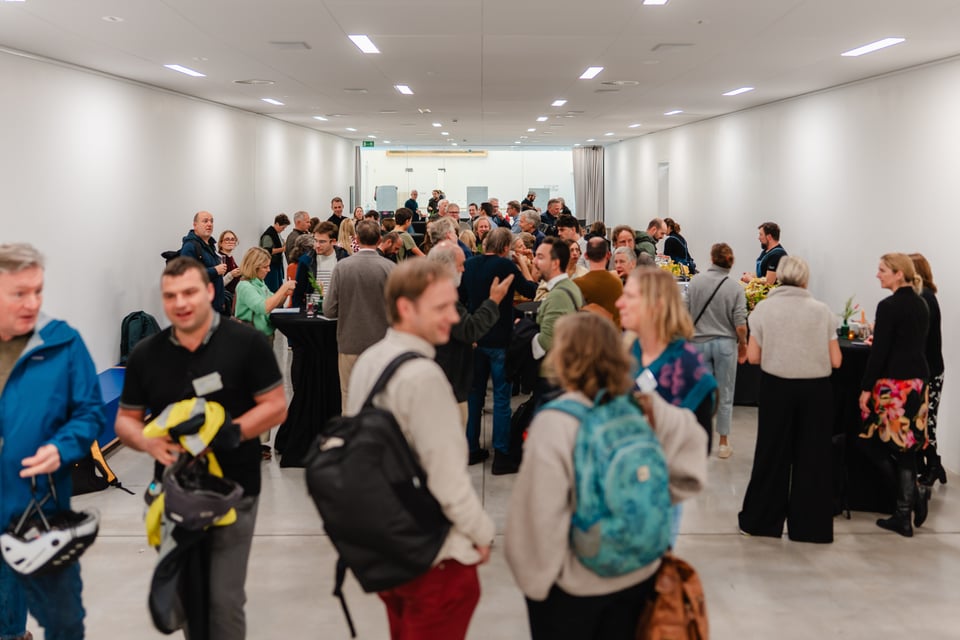
To answer these questions, we analysed the results of the annual survey among project leads, gathered insights from the wider network, and reflected on discussions from the event Two Years of the Leuven Climate Contract, held in October at M Museum. Together with key partners, we explored seven themes: heating, mobility, depaving and greening, energy service companies (ESCOs), the link with LOV2030, food, and impact.
What is the Leuven Climate Contract?
The Leuven Climate Contract brings together breakthrough projects across five themes: energy, buildings, mobility, depaving and greening, and circular economy. Each project is set to tackle barriers that currently slow down large-scale change — such as legal hurdles, financing issues or a lack of cooperation. What stands in the way of district heating? How can we make cycling and car sharing easier? Can we keep building materials in the city by setting up a circular urban resource hub? If we crack these challenges, real breakthroughs become possible. More than 30 Leuven-based organisations, institutions and companies have committed to developing and delivering projects within the Leuven Climate Contract.
Leuven 2030 connects these players, provides support where needed, and works on cross-cutting themes such as social justice, collective renovations, communication and financing.
.jpg)
What do the overall figures tell us?
CO₂ emissions have stalled
Leuven’s CO₂ emissions fell in 2022, but figures for 2023 show that progress has stalled. In the service sector — including shops, hospitality, banks, education and businesses — emissions have even increased. Mobility shows little change as well.
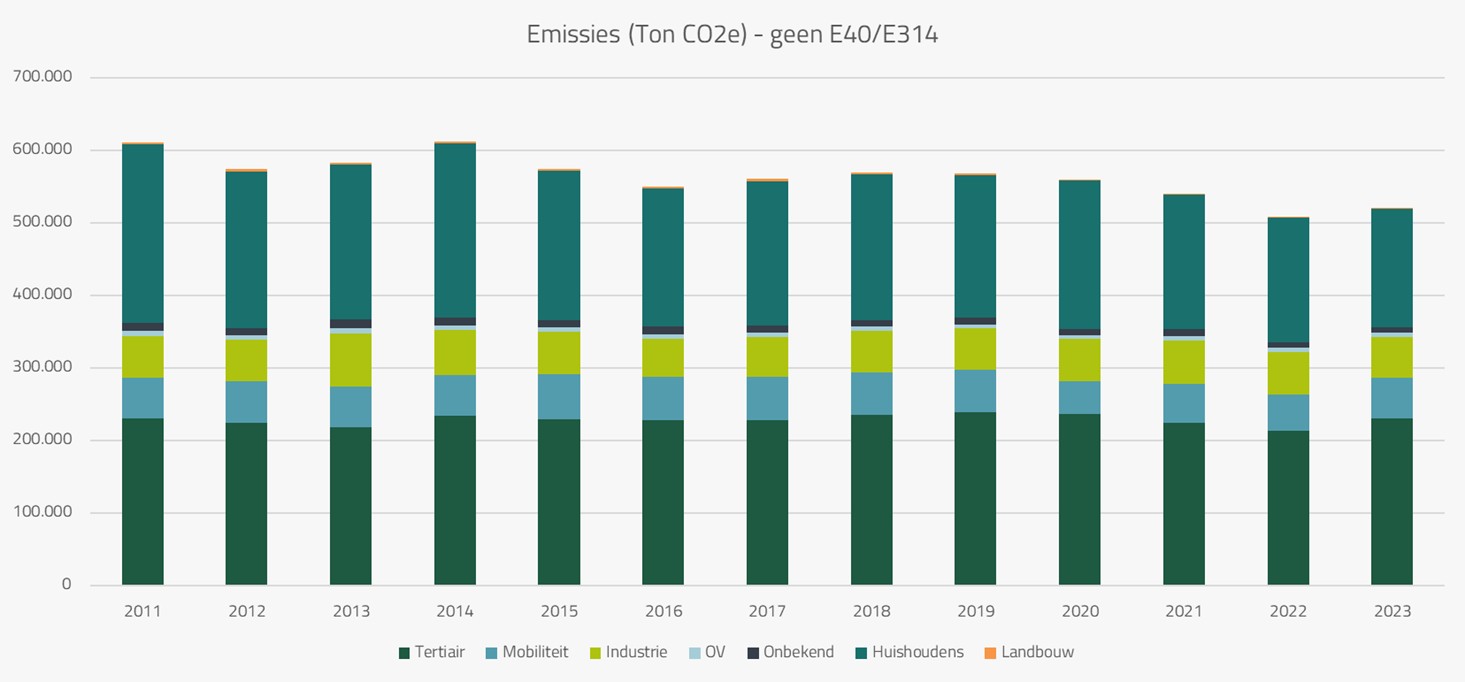
Households are making efforts, but Leuven continues to grow. Each year, the city welcomes more residents, students and businesses, as reported in the November edition of LVN. This growth offsets many of the savings that are made. The fact that emissions are not rising in line with this growth does show action, but it is not enough to make the city resilient by 2030.
How are the breakthrough projects progressing?
The Leuven Climate Contract is our plan to protect the city against the impacts of climate change, supported by a broad portfolio of projects. In May, we surveyed project leads about progress, timing, financing, communication and contributions to social justice. While the survey does not go into detail — every project is different — it does provide a useful overall picture. We received responses for 62 projects, around 73% of the total.
Movement, but also delays
On a scale from 1 to 10 on progress, projects score slightly higher than last year: as the curve is moving towards the right hand side, progress is visible, though modest.
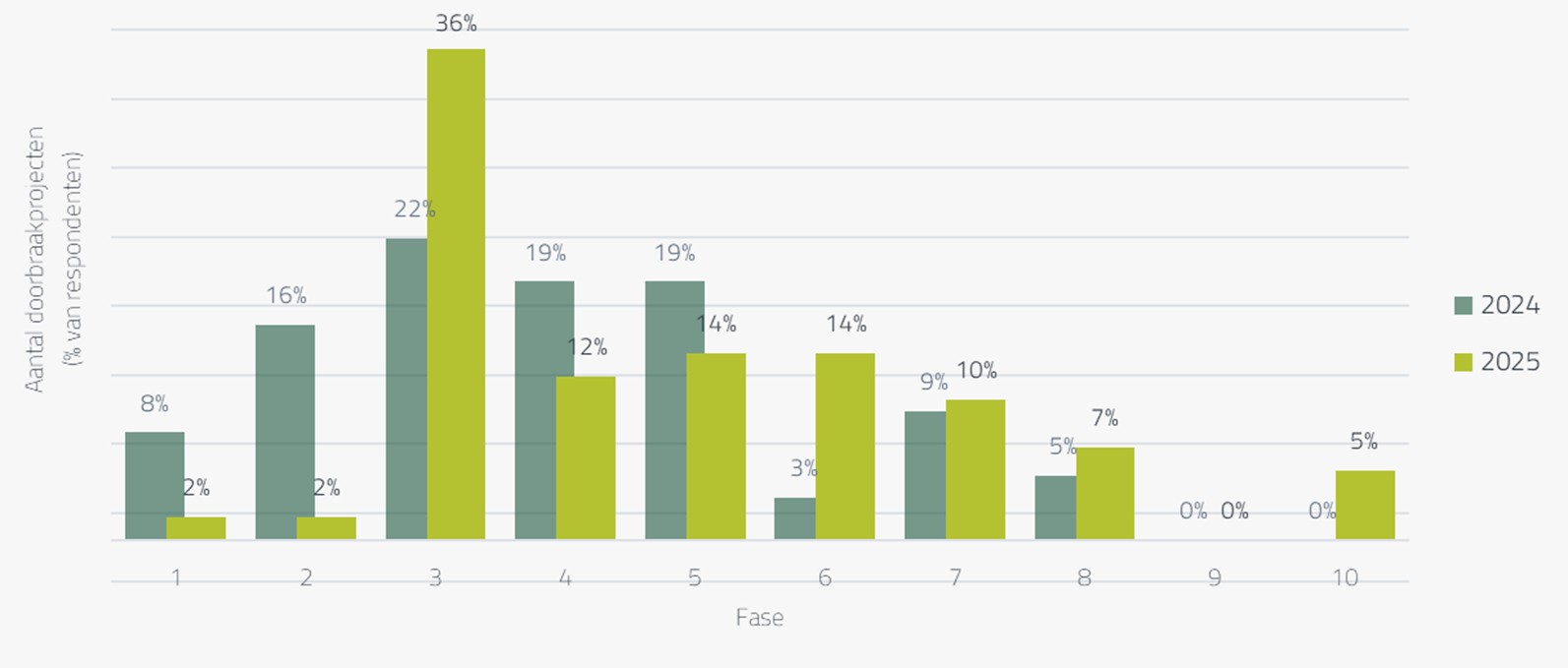
- Projects scoring 10 include, for example, a completed city-wide communication campaign highlighting what residents can do to live more sustainably, and how the city can support them. Other completed projects are ongoing initiatives, such as embedding circular reuse of construction materials in building projects, of which the first pilot case has now been completed.
- Projects scoring 1 or 2 include a project focused on installing solar panels on roofs of vulnerable households through third-party financing. Legal barriers proved too difficult to overcome, and financing ultimately did not materialise (although other solar-related projects are still in the pipeline). Some projects also struggle due to a lack of capacity.
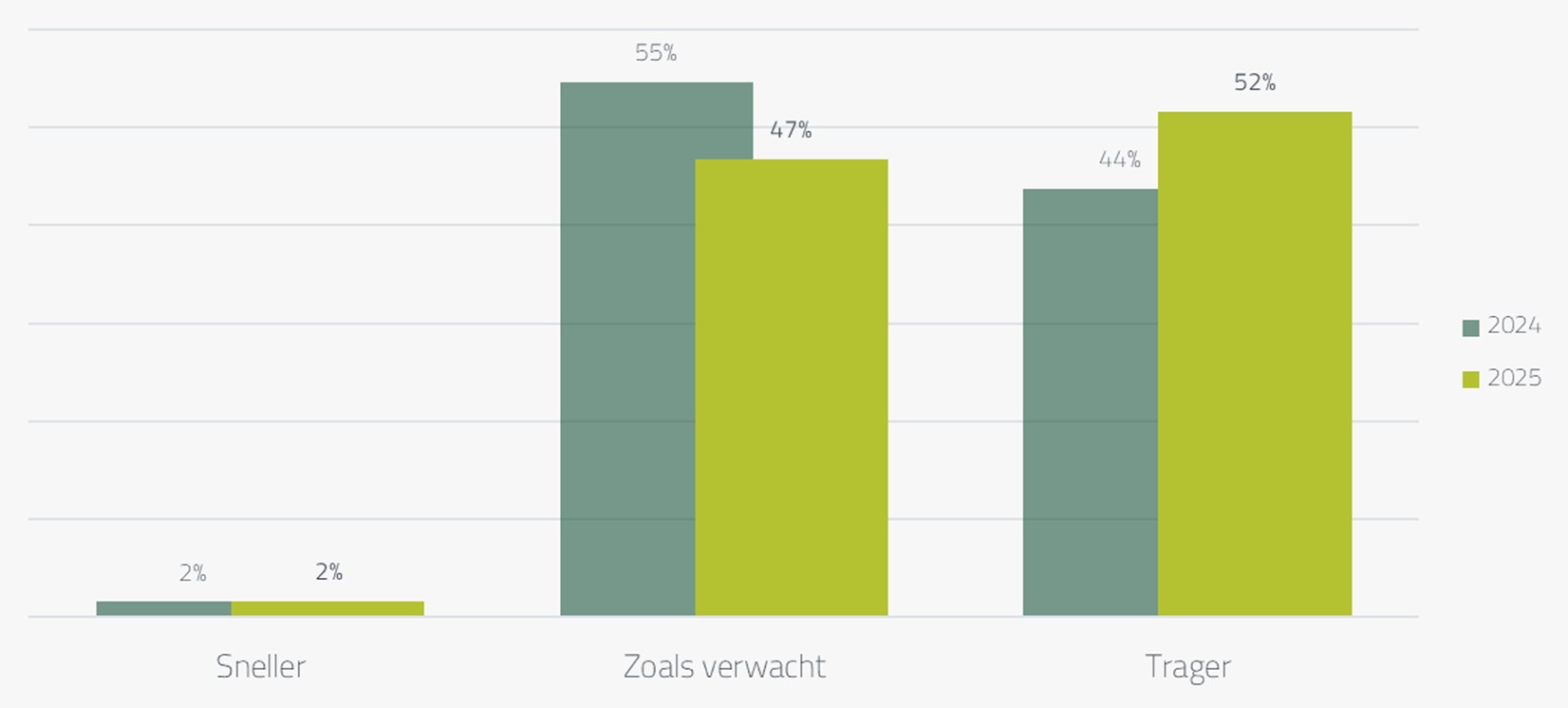
More than half of the projects report delays. This is partly expected when tackling deep-rooted barriers, but it also shows that initial ambitions do not always translate smoothly into practice.
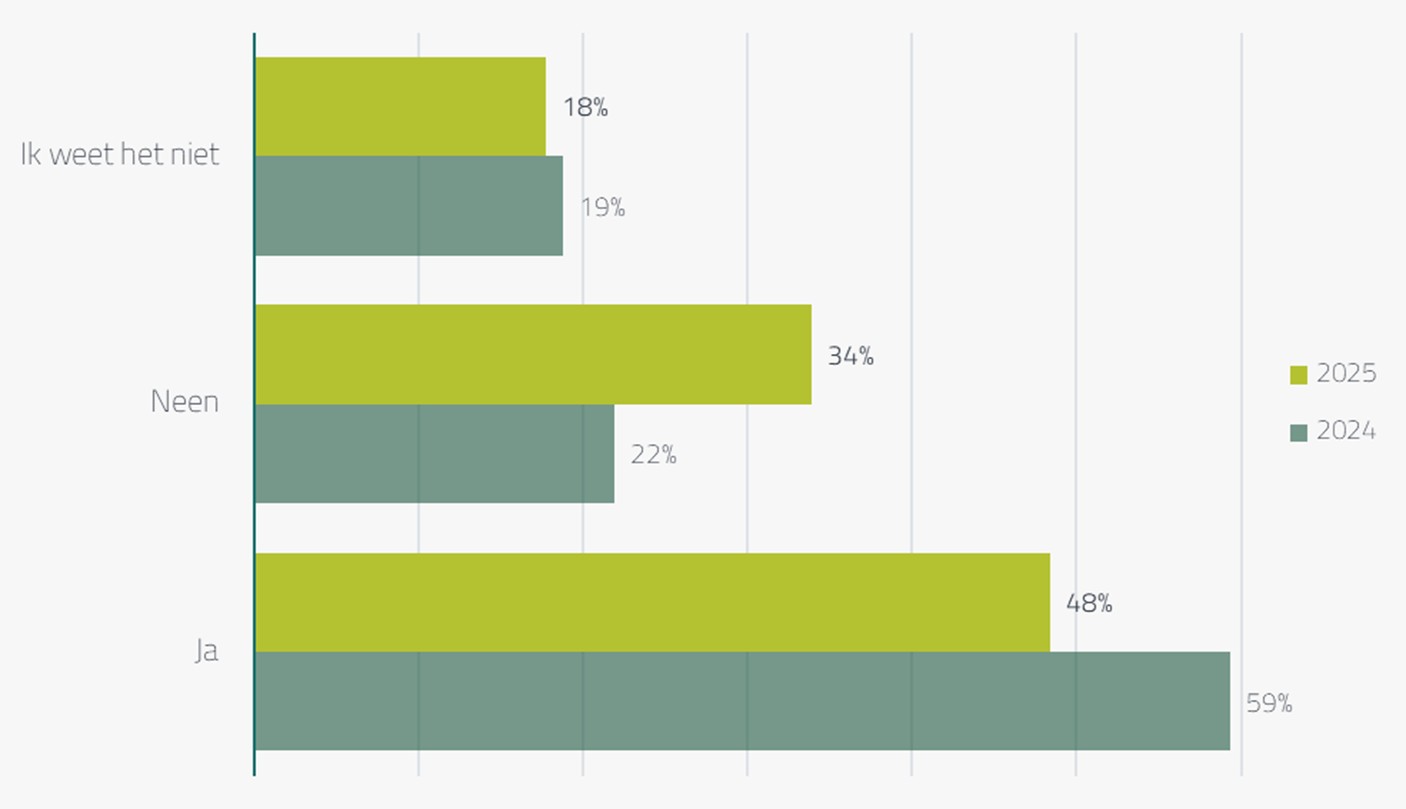
Financing remains a major challenge
That is why Leuven 2030 is working towards the creation of a Leuven Climate Fund, aimed at making it easier to finance climate projects locally and on a long-term basis. A next step has now been taken: a legal expert has been appointed to develop the legal framework. After that, we will assess whether and how the fund can be launched.
What about social justice?
We asked project leads how their projects address social justice and how this is measured. A general survey, however, is not enough to properly assess this — more in-depth conversations are needed. The responses also show that ‘social justice’ is interpreted in many different ways, and that there is no shared standard yet.
Over the past year, Leuven 2030 worked with expert Erik Béatse to develop a 15% benchmark for the Impactschatter. This tool, developed by Sweco Belgium for Leuven 2030, estimates the social benefits of climate projects. According to the benchmark, at least 15% of a project’s impact should benefit Leuven residents in vulnerable situations.
For example, in a new district heating network, at least 15% of connected households would need to be families that are more sensitive to energy price fluctuations. Further work on this benchmark will continue in the coming months. For future projects, the aim is to encourage teams to consider social impact from the very start.
We are also exploring other ways to place greater emphasis on social justice within the Leuven Climate Contract. Discussions are ongoing with partners such as Minder is Meer, SAAMO, Buurtwerk ’t Lampeke and the city. The challenge remains significant and increasingly pressing.
Collective renovation of large buildings
Within the Leuven Climate Contract, Leuven 2030 is also strongly committed to speeding up the renovation of large buildings. Wherever possible, we aim to take a collective approach by bringing the right people together, sharing experiences and stepping in when partners face obstacles that would otherwise remain unresolved.
To this end, a pilot group was set up with the City of Leuven, KU Leuven, UZ Leuven, imec, Zorg Leuven, Dijledal and AGSL. After two years, however, we see thay joint progress has been limited. The partners differ greatly in terms of building types, portfolio size and available resources, making it difficult to agree on and follow up with shared actions. Each organisation is making individual progress, but taking major steps together is not always feasible or effective.
Even so, we continue to look for opportunities to realise our ambitions: making Leuven’s buildings fossil-free more quickly, encouraging collaboration, exploring collective heating solutions, sharing expertise and data, bundling large projects and removing barriers. To this end, we've developed a useful (and free) ESCO guide book, to help wether OEPC's and ESCO's are useful for a particular building's context. This guide book is available via the Dutch Leuven 2030 website.
Conclusion
The Leuven Climate Contract is moving forward, but it is not on track. Key obstacles include limited capacity, entrenched ‘business as usual’ practices that are hard to break free from, financing and risk concerns, difficulty securing firm commitments, and slow decision-making processes.
In the coming months, we will focus more strongly on the service sector — businesses, organisations, institutions and education — where CO₂ emissions are rising. Our aim is to reignite ambition and motivation to tackle this challenge together, for example by renovating (office) buildings, installing solar panels and switching to sustainable heating. At the same time, the city administration continues to look for smart policy choices that can support and complement these efforts.
For discontinued projects, the Mission Team (City of Leuven and Leuven 2030) is identifying new breakthrough projects that address the same underlying barriers. The core logic remains unchanged:
- tackle structural bottlenecks,
- scale successful solutions,
- and work towards a prosperous, healthy and resilient Leuven.
A Leuven that is ready for the future.

In partnership with

Related breakthrough projects

Gerelateerde acties
