Filip%20Van%20Loock%20(4).jpg)

Summer is just around the corner, and on hot days Leuven’s city centre heats up significantly more than the greener municipalities surrounding it. Streets and squares absorb and retain heat, while there are fewer trees, green spaces and open water features to cool the urban environment.
At the same time, intense rainfall events are becoming more frequent as the climate changes. Green spaces help rainwater infiltrate the ground, reducing the risk of flooding. Greenery and water in the city therefore offer much more than an attractive view: they play a crucial role in making Leuven a pleasant, healthy and liveable place to live.
Through the ‘de-pavement and greening Taskforce’, one of the breakthrough projects within the Leuven Climate City Contract, Leuven 2030 is working with a range of partners to create more space for trees, water and cooling across the city. The focus is deliberately placed on locations where the impact can be greatest.
What has been done so far?
During the first phase of the project, Leuven 2030 worked together with the City of Leuven’s Data and GIS Department to map which organisations and landowners are responsible for the largest areas of sealed surfaces across the city.
The analysis confirmed what we had suspected: the City of Leuven and KU Leuven own and manage a significant share of Leuven’s paved and sealed spaces. As a result, the taskforce concentrated its efforts on collaboration with these two partners.
The reasoning is straightforward: those who manage the largest areas of hard surfaces also have the greatest potential to make a difference quickly.
How do we continue?
The project is now moving into its next stage.
Within the Leuven Climate City Contract, Leuven 2030 is revising its climate adaptation breakthrough projects, placing greater emphasis on practical implementation and visible results on the ground.
Together with representatives from the City of Leuven and KU Leuven, we are developing a new portfolio of projects designed to accelerate greening and depaving efforts and complement the initiatives already included in the Climate City Contract.
This work builds on the extensive knowledge, strategies and plans developed in recent years, including Leuven’s Green Plan and the city’s climate adaptation strategy for public spaces.
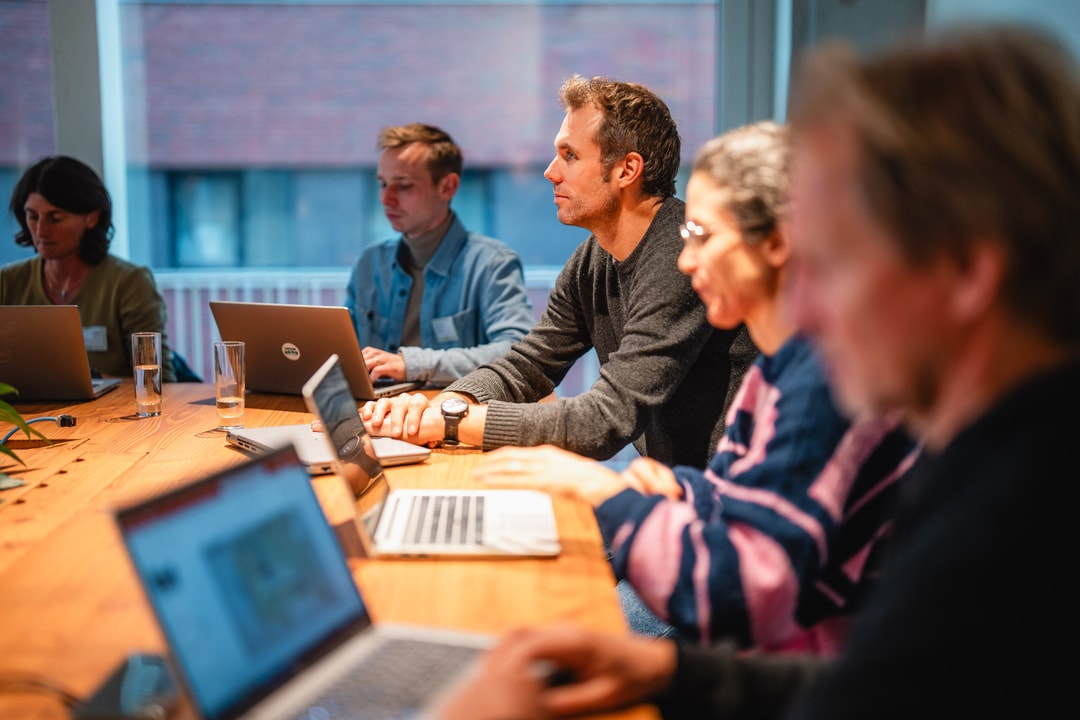
In May, representatives from the City of Leuven and KU Leuven came together to further define these new projects. At the same time, preparations are underway to expand the taskforce and involve additional Leuven-based organisations that can contribute to climate adaptation efforts.
What is holding us back?
One of the biggest barriers to implementing greening and depaving projects is securing sufficient financing.
That is why Leuven 2030 is helping to develop a new financing model based on a smart combination of public and private funding. The idea is to use public resources as a lever to attract private investment, making large-scale greening and depaving projects easier to deliver across Leuven.
The model goes beyond calculating the direct cost of interventions. It also quantifies the broader societal benefits of greener urban environments and reduced flood risk, translating these benefits into economic value.
To achieve this, Leuven 2030 and the City of Leuven are collaborating with BitaGreen, a spin-off from the Vrije Universiteit Brussel that specialises in modelling and quantifying the impact of climate projects.
Based on this work, we have already developed an initial investment case worth €95 million. The package includes measures such as depaving, tree planting and the installation of green roofs. The proposal is currently being refined together with the City of Leuven and external investors.
Building a more resilient leuven
The goal is clear: to make Leuven better equipped to cope with heatwaves, drought and flooding, while creating more space for greenery, cooling and breathing room throughout the city. Every paved surface that gives way to trees, plants or water helps reduce risks to public health and safety. It improves air quality, strengthens climate resilience and makes neighbourhoods more comfortable places to live.
In short, greening and depaving do more than make Leuven more attractive. They help create a city that is stronger, more resilient and better prepared for the future.
Photo ©Filip Van Loock for City of Leuven


In partnership with

Related breakthrough projects