



“In Leuven’s Central Prison, the scenery is flat everywhere.” That’s how one of the inmates described it during the participatory process of the European JUSTNature project. Based on their input, the once fully paved over, concrete yard was given a green makeover with grassy hollows, flowers and plants in all different scents and colours. Simple changes, but meaningful for the people who spend their days there.
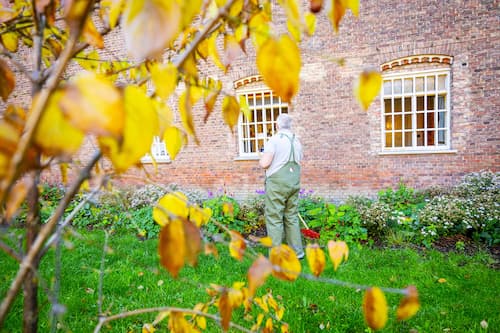
Without the participatory process that JUSTNature made possible, it might have been harder to see where the real need was. During the discussions, many ideas came up such as a swimming pond, but in the end a greener and more biodiverse courtyard turned out to be the more realistic option.
Most of the work was done by the detainees themselves. They spread soil, planted the flower beds and put the trees in the ground. Only the breaking up of the concrete was done by external workers. With a relatively small budget of about €15,000, the space was transformed into something much greener.
Today, because of staff shortages and a large number of detainees, access to the garden is unfortunately limited. But even seeing greenery from a distance can make a difference. When space is scarce, nature can still have a positive impact on mental wellbeing. Detainees themselves report fewer conflicts and tensions when they are in open green spaces than in tight, enclosed courtyards.
Green as a leverage for wellbeing
The JUSTNature project’s aim from 2022 until the end of February 2026 was to introduce nature-based solutions in heavily paved urban places where many people live, work or spend time. Because everyone deserves access to green space.
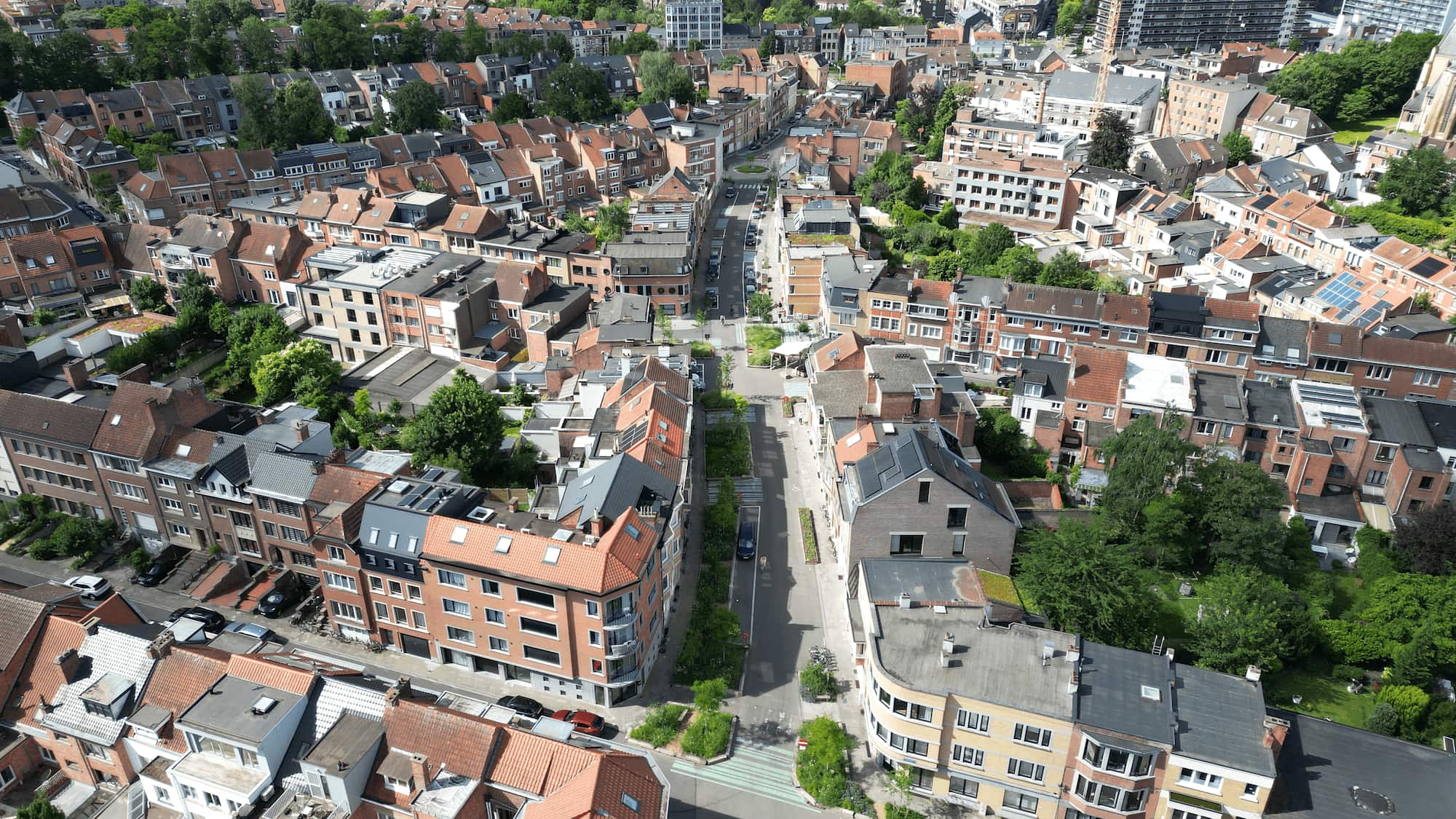
In Leuven, the project tackled two different locations: the courtyard of the central prison and C. Meunier street.
From sewer works to a climate-resilient street
In Constantin Meunier street the starting point was quite practical: the sewer system needed to be replaced. The City of Leuven used this as an opportunity to rethink the entire street.
The idea was to turn it into a future-proof ‘climate street’: a street that can absorb rainwater better, reduce hard surfaces, give trees enough space to grow, create more pleasant public space for residents, a one-way street and possibly a heat network.
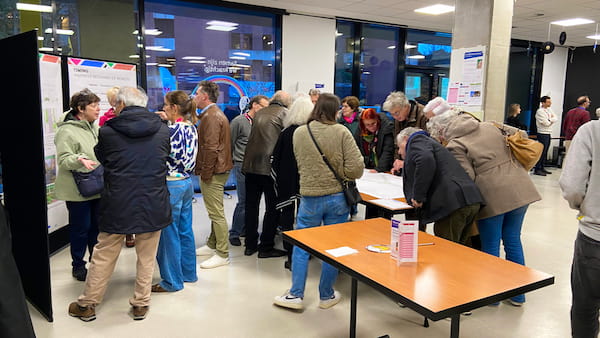
Through a participatory process called ‘Atelier Meunier’, local residents were invited to share their ideas and experiences. After all, they are best situated to know how the street is actually on a day to day basis.
Together with the neighbourhood, the city tested a pilot setup that created more room for greenery, pedestrians and places to meet, combined with a different traffic layout. Traffic counters measured the impact of one-way traffic on nearby streets, while residents shared their experiences through surveys.
“I liked that we were involved as residents in a very informal way. Simply by ringing people’s doorbells and talking to them, you’ll discover things as a designer that you would otherwise never notice. Why do people want a bench exactly there? Because that’s where the evening sun hits. Why does the bench need an arm rest? So older residents can get up more easily. Those may seem like small details, but for residents they make a big difference. For me, this project is a success. It brought people closer together and really set our street in motion.” — Hilde Mommaerts, resident of C. Meunier street
The pilot setup is still in place today. In the coming weeks a decision will also be made on whether a district heating network will be included in the final redesign.
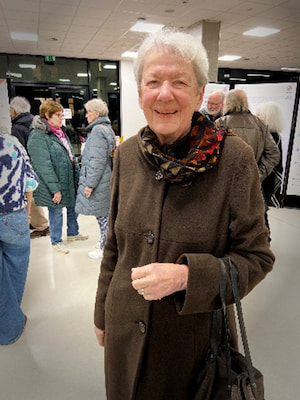
“I attended all the Atelier Meunier meetings out of curiosity, because I live right in the middle of the pilot setup. You can really see that people were listened to. Some adjustments were made regarding parking, which was important for many residents. Not everything is perfect and some changes take a bit of getting used to, but the street already looks nicer and I’m curious to see the final design.” — Elisabeth Wouters, resident of C. Meunier street
What does that mean?
Greening is not only about making a street look nicer. With the Leuven 2030 Impact Forecasting Tool we also looked at the wider benefits.
According to this tool, once the final redesign is completed, the additional trees and shrubs will remove more than 5 kg of fine particulate matter from the air each year. That doesn’t mean the plants literally ‘neutralise’ 5 kg of emissions, but it does mean that the planting contributes in a similar way to cleaner air in the street.
Reducing hard surfaces also brings health benefits. The model estimates a gain of 0.08 DALY (Disability-Adjusted Life Year) per year. It’s a complex concept, but in practice it means that thanks to the improved living conditions in this street we gain almost one extra month of healthy life per year, spread across all residents.
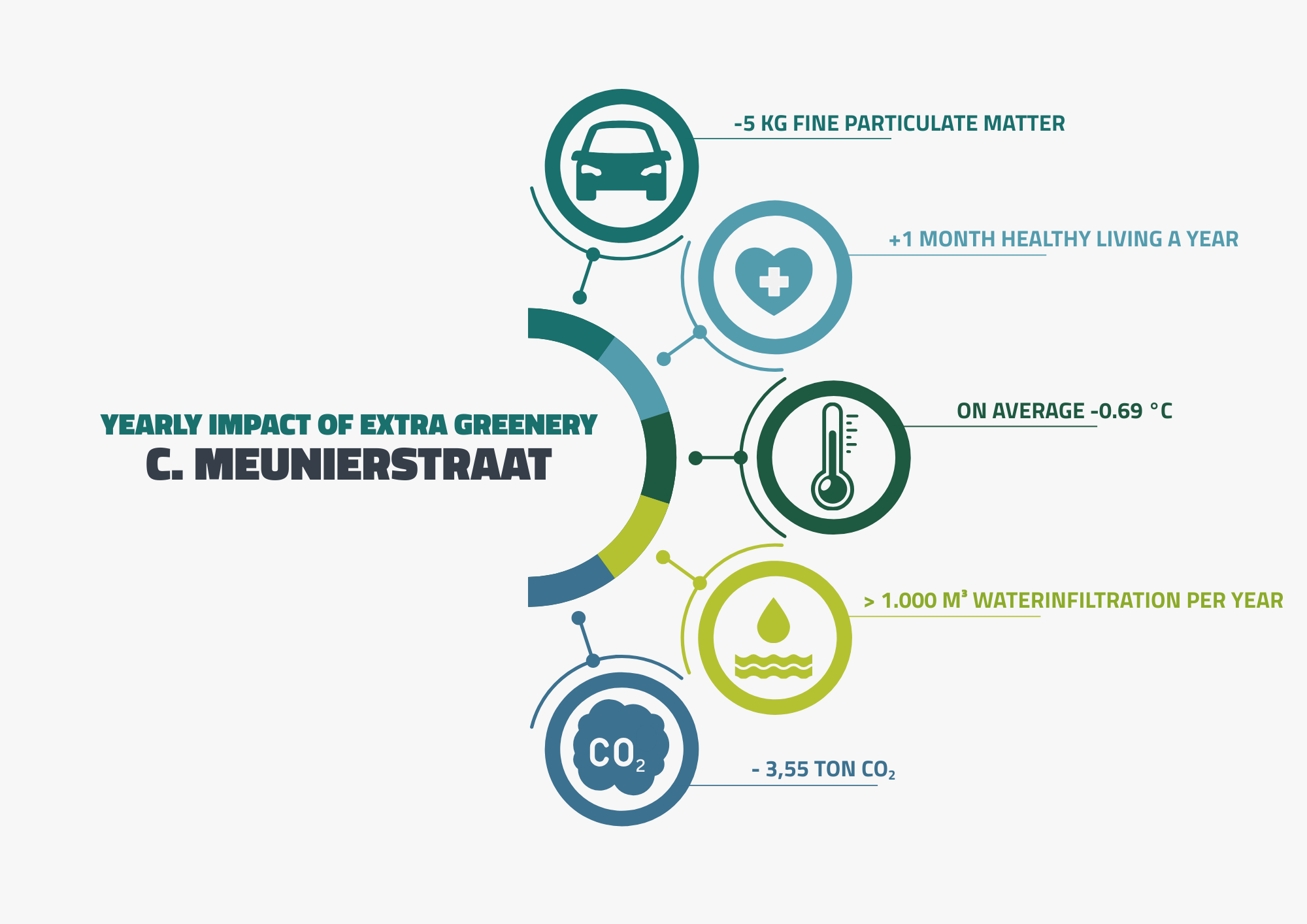
The greenery also makes a difference during heatwaves. The Impact Forecasting Tool calculated that the street will be on average almost 0.7 °C cooler compared to when it was completely paved.
Earlier modelling within the JUSTNature project even suggested that the trees could bring up to 2 °C of cooling on hot summer days. With weather sensors that are still installed in the street, we will be able to compare the real measurements with these model predictions in the future.
Learning through experimentation
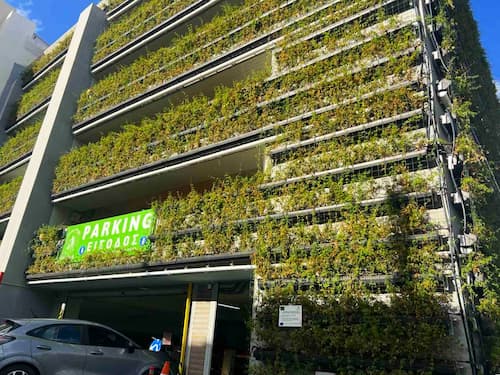
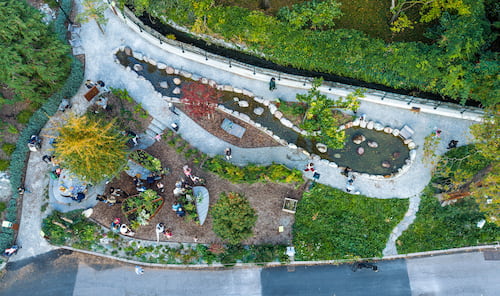
In mid-February we concluded the JUSTNature project in Leuven together with our European partners. Across Europe, similar experiments were carried out. In Chania, Greece, for example, a covered parking building was equipped with green façades planted with jasmine. In the Italian town of Merano, a new public city park was created. In every case, participation and input from local residents played a central role. Looking ahead, the partners are now considering which elements from these experiments can be used in future designs.
Lise Neirinckx, public space designer at the City of Leuven, explains: “Projects with European funding allow us to free up time and resources to experiment. That’s not always easy within the day-to-day work of a city administration. We can’t build a pilot setup or run such an extensive participation process for every street in Leuven, like we did for Constantin Meunier street. Nature-based solutions are also evolving very quickly. The ideas that have proven to work and are feasible, will be incorporated in our designs. That way we keep improving our blueprint for Leuven streets.”
Not an endpoint, but a next step
For JUSTNature this marks the end of the project. For Leuven, it is another step forward.
With or without a district heating network, the redesign of Constantin Meunier street is an important step towards a climate-neutral street. What we learn here will also support future redevelopment projects across the city. Step by step, we continue building a Leuven that is stronger, healthier and ready for the future, where greenery is not an extra, but a natural part of wellbeing and quality of life.

This project has received funding from the European Union's Horizon 2020 research and innovation programme under grant agreement No 101003757. Read more here: https://justnatureproject.eu/

This project has received funding from the European Union's Horizon 2020 research and innovation programme under grant agreement No 101036519. Read more here: https://netzerocities.eu/pilot-cities-programme/

In partnership with

Related breakthrough projects


stad%20Leuven_teaser.jpg)
.jpg)
.jpg)