
One year ago, Leuven 2030 and the City of Leuven launched the Leuven Climate City Contract, bringing together dozens of partners around concrete breakthrough projects to prepare Leuven for a climate-neutral future. On 5 November 2024, exactly one year after submitting the contract to Europe, several of these partners met up again to take stock: what have we achieved so far, what have we learned, and where can we find new opportunities?
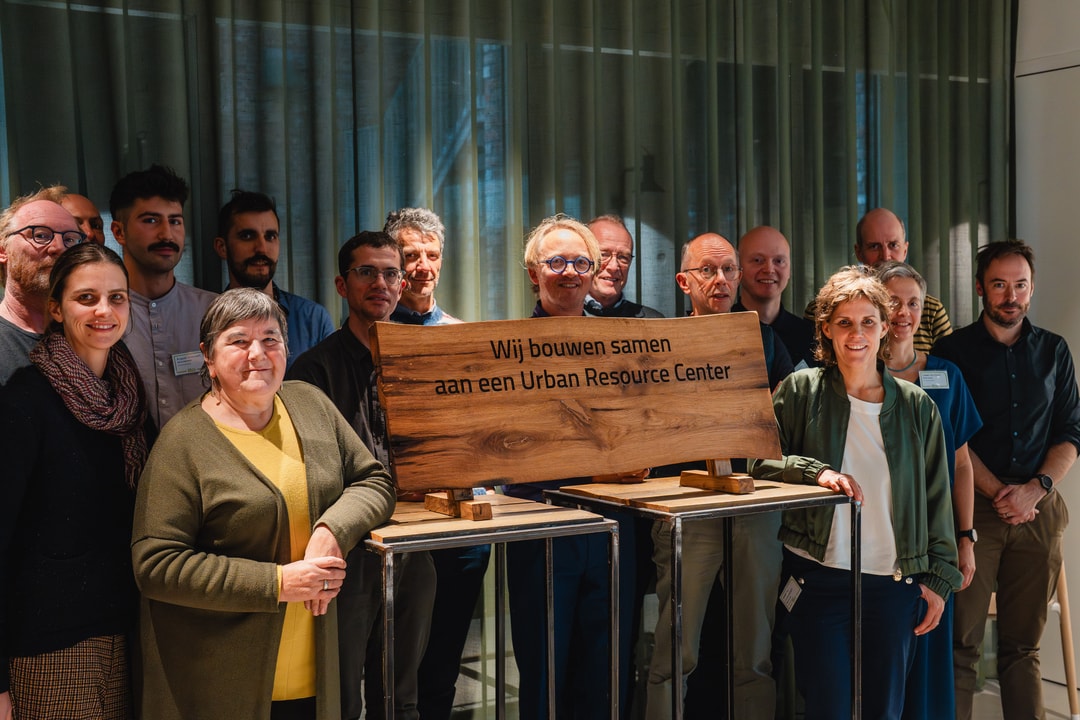
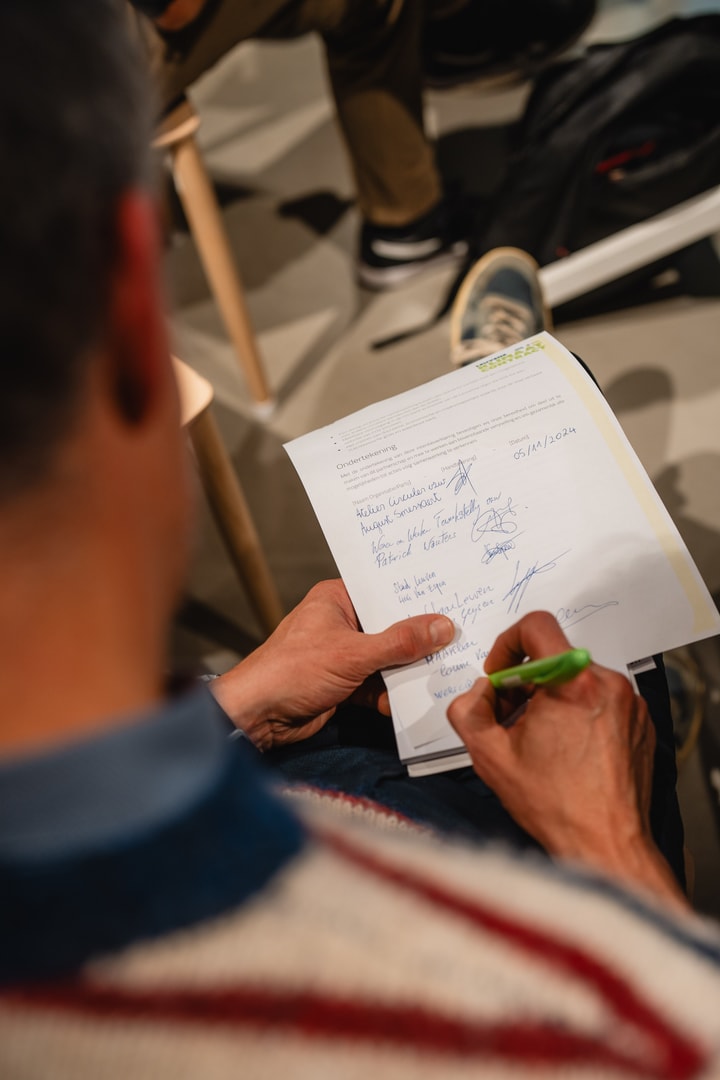
One of the highlights of the day was the signing of a letter of intent by ten partners to further develop Leuven as an Urban Resource Centre.
The signatories – Atelier Circuler vzw, Wonen en Werken vzw, KU Leuven, the City of Leuven, Maakbaar Leuven, MAAKbar, werecircle, Ecowerf, ViTeS and Leuven 2030 – are sending a clear signal: a circular economy in Leuven is a shared and collective ambition.
What do we mean by Urban Resource Centre?
Rethinking Leuven as an Urban Resource Centre means rethinking the city so that materials are used less linearly – from raw material to product to waste – and more circularly.
Think reuse, repair and innovative ways to limit residual waste streams. Leuven has already taken important steps with initiatives such as the Materialenbank, where circular construction materials are made available. But the ambition goes further. By upgrading materials such as plastics, wood, textiles, electronics and medical equipment, the Urban Resource Centre can reduce waste, strengthen resilience against rising raw material prices and create social jobs, while also limiting emissions.
Leuven has deliberately chosen a more ambitious approach within the European mission 100 Climate-Neutral and Smart Cities. In addition to direct emissions from energy and mobility, the city also addresses indirect emissions linked to the production and consumption of materials. Even if these emissions do not always occur locally, Leuven wants to take responsibility for its full impact – including consumption. A strong circular economy also helps safeguard the city’s economic stability and future availability of resources.
This breakthrough project makes that ambition tangible. By bringing public and private partners together, it goes beyond environmental impact alone and works towards a structural change in how we deal with materials.
Based on well-founded estimates, the project could, in the longer term:
- reuse and repair 10,000 tonnes of materials per year;
- avoid 5,000 tonnes of CO₂ emissions annually;
- create dozens of social jobs.
“Circular projects are not only good for the climate,” says Patrick Wauters of Wonen en Werken vzw. “They also offer opportunities for social inclusion. We want to create jobs that are accessible to everyone, regardless of education or background.”
The exact form this reorganisation will take – the legal structure, shared communication, administrative and logistical arrangements – is currently being explored together.
Collaboration at the core
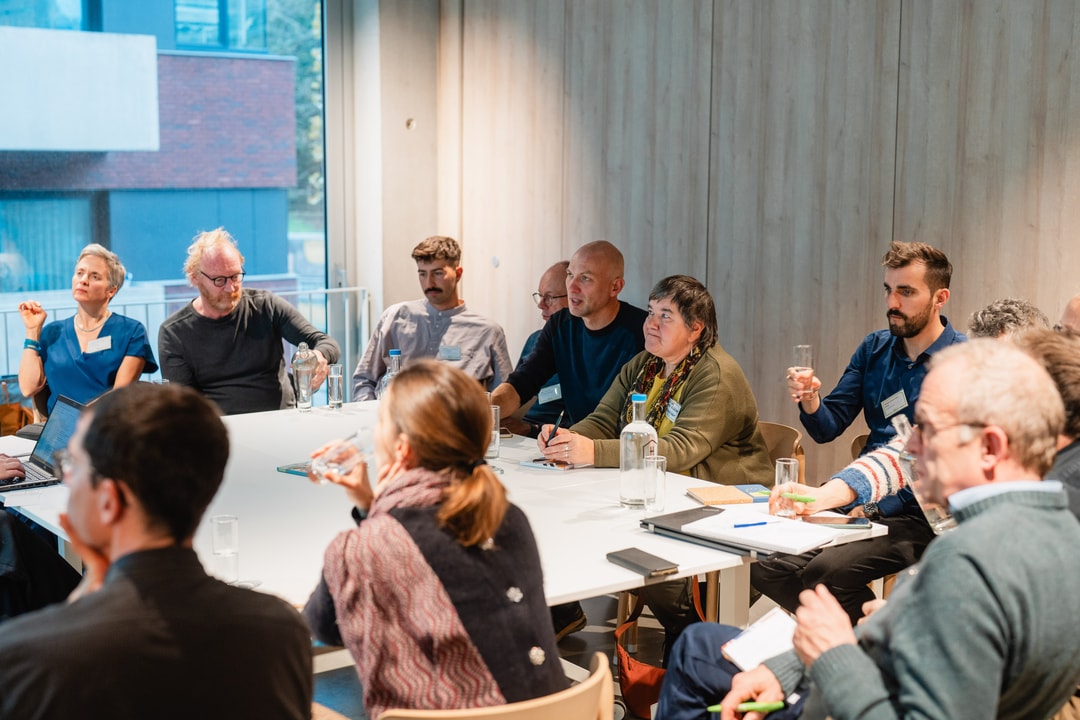
The meeting on 5 November 2024 highlighted just how unique this collaboration is. Ten partners, each with their own expertise, are joining forces to make Leuven a frontrunner in circularity:
- The City of Leuven plays a central role as client, regulator, communicator and funder. With a new city administration on the way, there is hope that the circular economy will again become a strategic policy priority.
- KU Leuven, supported by European funding through the Driving Urban Transitions (DUT) programme, will provide additional capacity over the next three years to collect data and help steer the project.
- Ecowerf and ViTeS focus on waste management and social employment, essential building blocks of a circular approach.
- MAAKbar and Maakbaar Leuven have been pioneering repair and reuse for many years.
- Wonen en Werken vzw, Atelier Circuler vzw and werecircle contribute hands-on and economic expertise in circular projects.
Leuven 2030 brings the partners together as agenda-setter and driving force. Through European support, additional funding was secured to involve regenerative economy expert Bruno Delepierre (Happonomy) in shaping an innovative collaboration model.
This partnership shows how broad the support for circularity in Leuven already is. And it is only the beginning: as the project grows, more partners are expected to join.
A symbolic start with a reused board
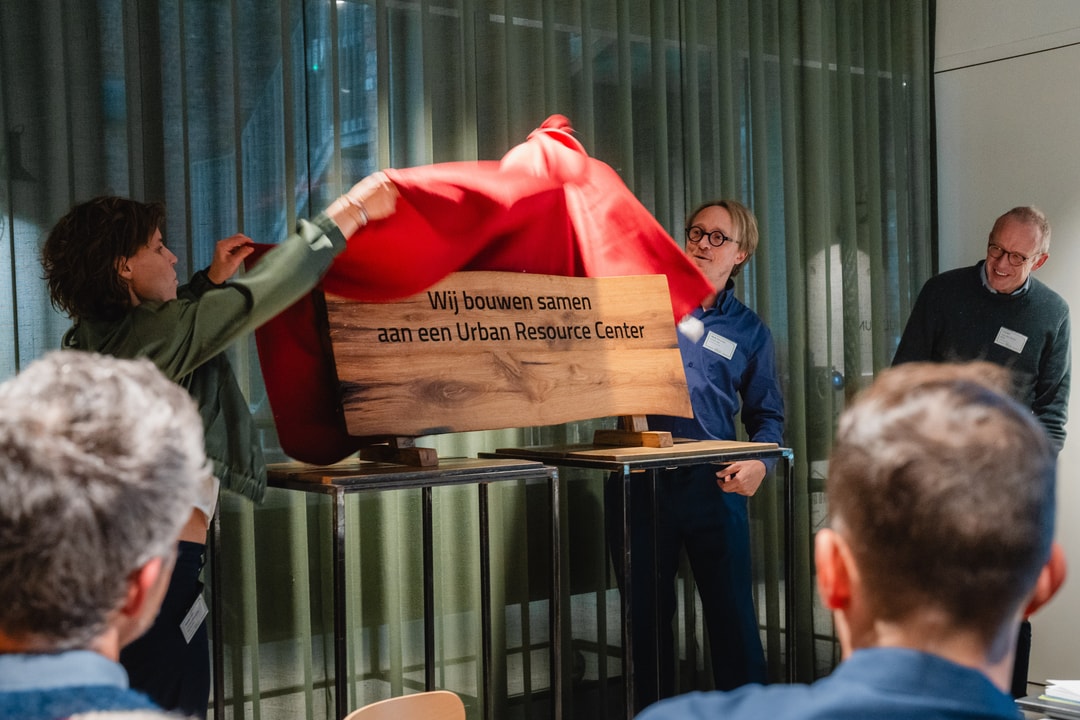
Instead of laying a first stone, the partners chose a different symbol: a reused wooden board, made by the Materialenbank from an old oak cupboard door.
“This symbol perfectly captures what this project is about,” says Nick Meynen of Leuven 2030, co-organiser of the event. “The letter of intent is more than symbolic. Our goal is to maintain the momentum created so far and turn this collaboration into concrete results. We hope Leuven’s approach will not only have local impact, but also inspire other cities in Belgium and across Europe.”
The collaboration with major financial institutions – made possible in part by the city’s circular strategy – also opens up new opportunities. It paves the way for larger investments in infrastructure and projects that can further anchor the circular economy in Leuven.
“Leuven has always made progress by working together,” says Lieve Van Espen of the City of Leuven. “This project shows that when citizens, businesses, knowledge institutions and the city join forces, we can truly make a difference.”
The reused wooden board may be a small symbol, but it sends a strong message: together, we are building a circular and future-ready Leuven.




In partnership with

Related breakthrough projects