.jpg)

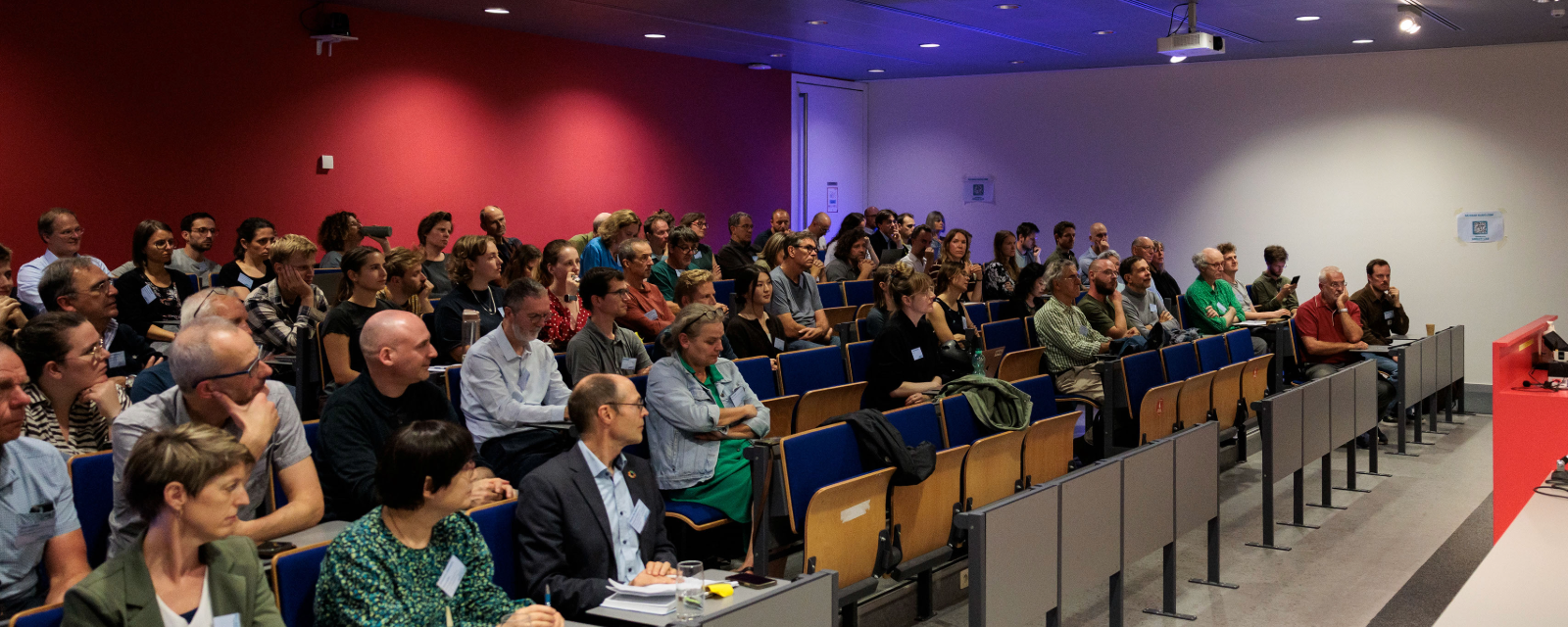
What if resilience does not start with major new technologies, infrastructure or more data, but with a much simpler question: can people still find and connect with one another? That idea was at the heart of the seventh Leuven Urban Lab on 17 September.
Under the title ‘Leuven as a living lab for local autonomy and resilience’, Leuven Aldorman for Climate and Sustainability Thomas Van Oppens, UCL professor and UN expert on sustainable food systems Olivier De Schutter, Leuven 2030 director Katrien Rycken and KU Leuven professor of bioscience engineering Annemie Geeraerd Ameryckx explored different ways to make Leuven stronger in unpredictable times.
“We need everyone – from the deep thinkers to the hands-on doers.”
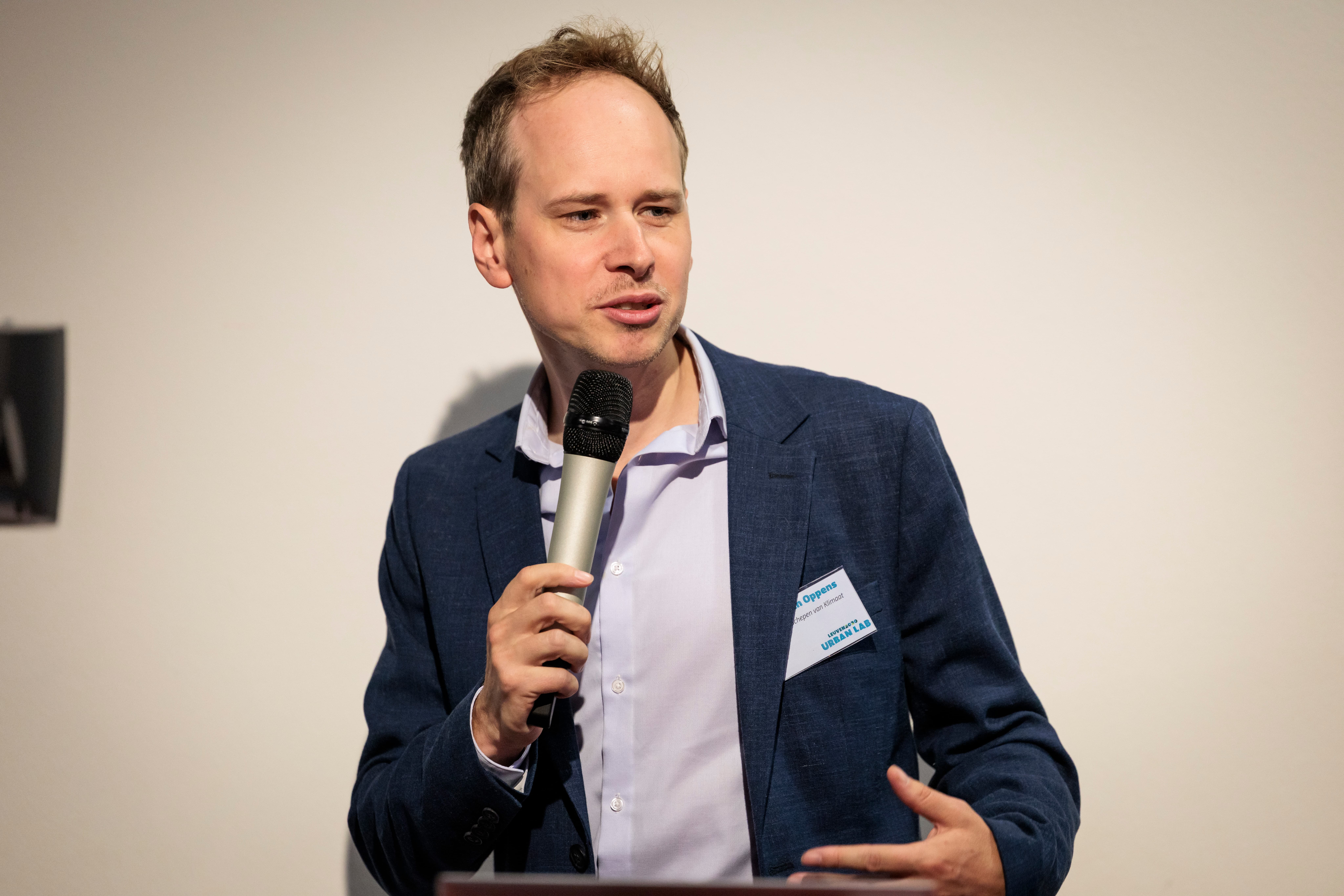
Leuven Aldorman for Climate and Sustainability Thomas Van Oppens set the tone. The war in Ukraine and the subsequent shocks to the gas market have shown just how vulnerable our systems can be when we depend on resources from far away.
“When you reuse materials, heat homes sustainably or encourage more people to cycle or use public transport, you’re not only making a city more climate-friendly. You’re also making it less vulnerable to geopolitical shocks.
“And for that, we need everyone: from the deep thinkers to the hands-on doers.”
The talent is here. Who brings it together?
Collaboration sounds simple. Organising it is much harder.
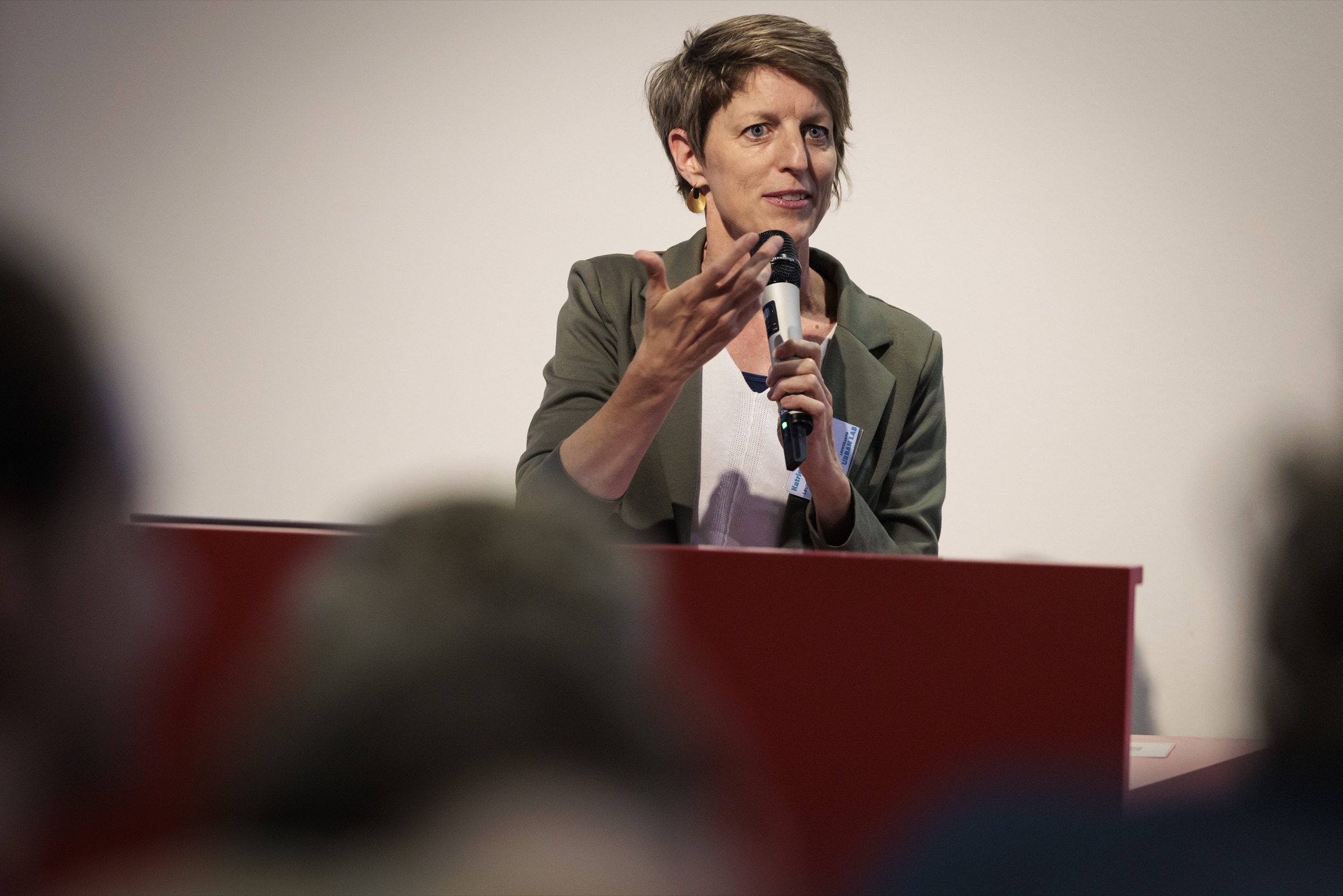
Leuven 2030 director Katrien Rycken described a broad survey the organisation sent to its network.
“Almost 300 people have completed it so far. Some told us what they need. Others are offering expertise, time or other forms of support.”
One answer, however, was rarely given: ‘I want to lead this.’
According to Rycken, this points to an important governance question.
“How do you make sure that this enormous amount of knowledge and goodwill doesn’t simply exist side by side, but actually results in joint action?”
Every field needs leaders who can bring people together in something like a living lab, which Leuven 2030 can then support.
The Leuven Climate Fund, launching in October, is part of that search.
“The aim is to bring different types of capital – from public funding to private investment – together around projects that accelerate Leuven’s climate transition.”
The partner city builds social capital
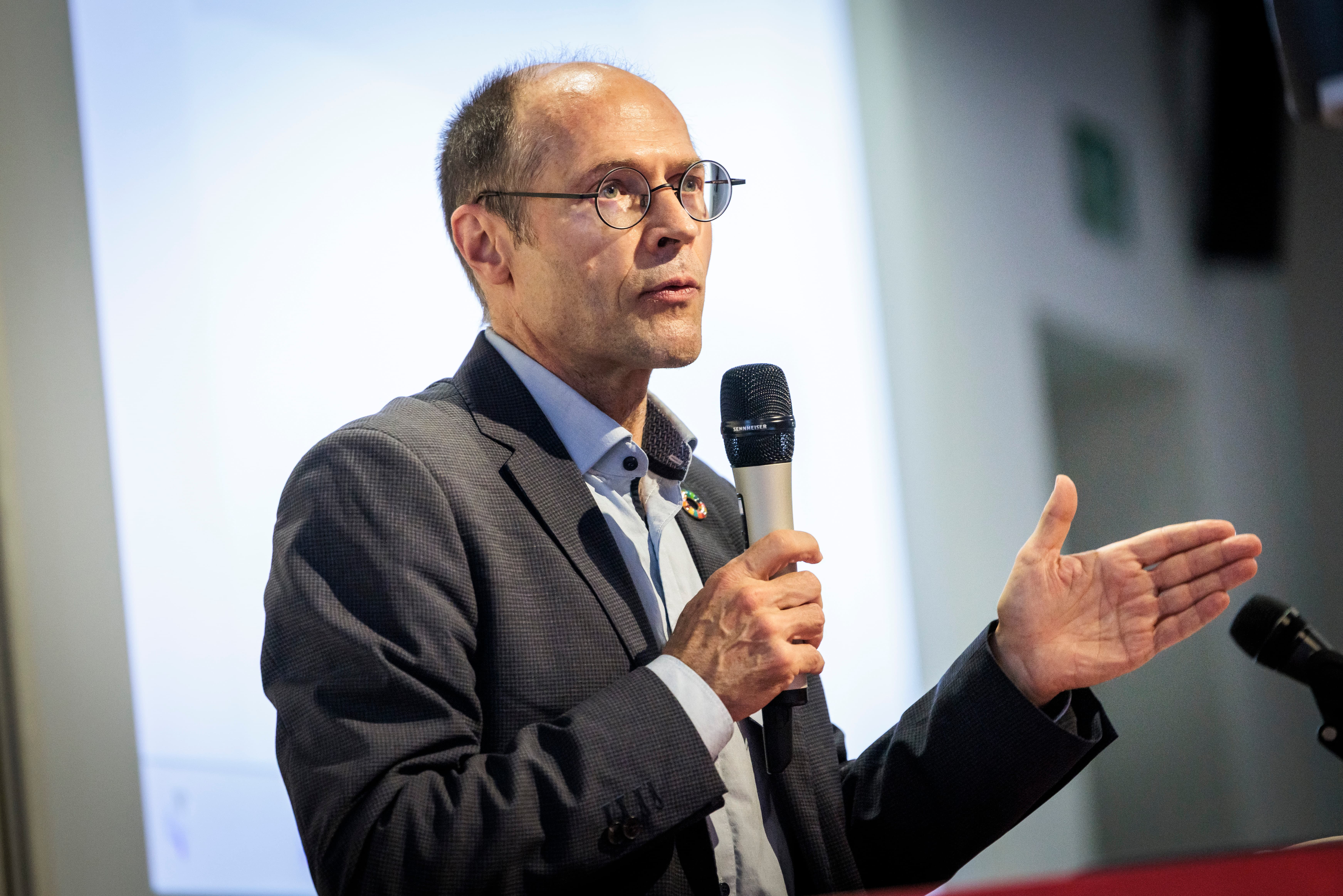
Financial resources are not the only essential ingredient in resilience. Social capital matters too, stresses professor Olivier De Schutter, former UN Special Rapporteur, UCL professor and expert on sustainable food systems.
“Social capital is people’s ability to work together based on trust and a sense that they belong to a community.”
He sees a particular role for local government.
“Cities are closer to their residents. They can involve citizens directly in decision-making and create greater legitimacy.”
They can also move beyond traditional policy silos more easily and connect areas such as energy, mobility, food, education, housing and employment.
De Schutter points to Bristol in the UK, where residents, entrepreneurs, civil society organisations and local politicians work together to rethink the local food system. Or Ghent, where research into local ‘commons’ has shown that citizen initiatives become stronger and more sustainable when they form alliances with businesses, civil society and local government.
“The city then stops being a technocratic authority dictating from above how society should change and becomes a partner city instead.”
“The more unequal our societies become, the less people feel that they are part of a community.”
Unfortunately, that social cohesion can no longer be taken for granted.
“Our cities are often organised in such a way that people live, work, shop and take their children to school in different places. As a result, they barely meet their neighbours.”
Screen time also plays a role. And various studies suggest that people’s sense of community declines as inequality increases.
“When the gap between rich and poor grows, people are more likely to see fellow citizens as competitors rather than as people with whom they share a common future,” De Schutter explains.
This weakening of the social fabric also has far-reaching consequences for the climate transition. If people want to invest together in a neighbourhood, food project or energy initiative, they first need to be able to trust one another.
The same social fabric is needed in business environments. At the Haasrode industrial park, Leuven 2030 staff are using a series of meetings to encourage innovation and collaboration and build a stronger community.
Create a village within the city
De Schutter points to cities that are deliberately investing in these connections.
“In Bologna, Italy, neighbours organise shared meals in their streets. And in Copenhagen, Denmark, homes are increasingly being built around shared spaces, allowing neighbours to meet naturally and take joint responsibility for their surroundings.”
He also sees such initiatives as one possible response to increasing loneliness, which has become a genuine public health issue.
“Social connection isn’t simply a welcome side effect of good urban policy. It is part of good urban policy.”
“If we bring businesses, citizens and public authorities together, we can identify projects that serve several objectives at once.”
This also explains why De Schutter places so much emphasis on participation.
“It’s not just about what a city decides, but how those decisions are made.”
Good public institutions do not need to do everything themselves. Instead, they can create the conditions that allow people to get the best out of one another.
According to De Schutter, this connecting power can create something resembling collective intelligence.
“If we bring businesses, citizens and public authorities together, we can identify projects that serve several objectives at once.”
A healthy food project, for example, can simultaneously improve health, reduce poverty, strengthen the local economy, build social connections and reduce the ecological footprint.
Hidden dependencies
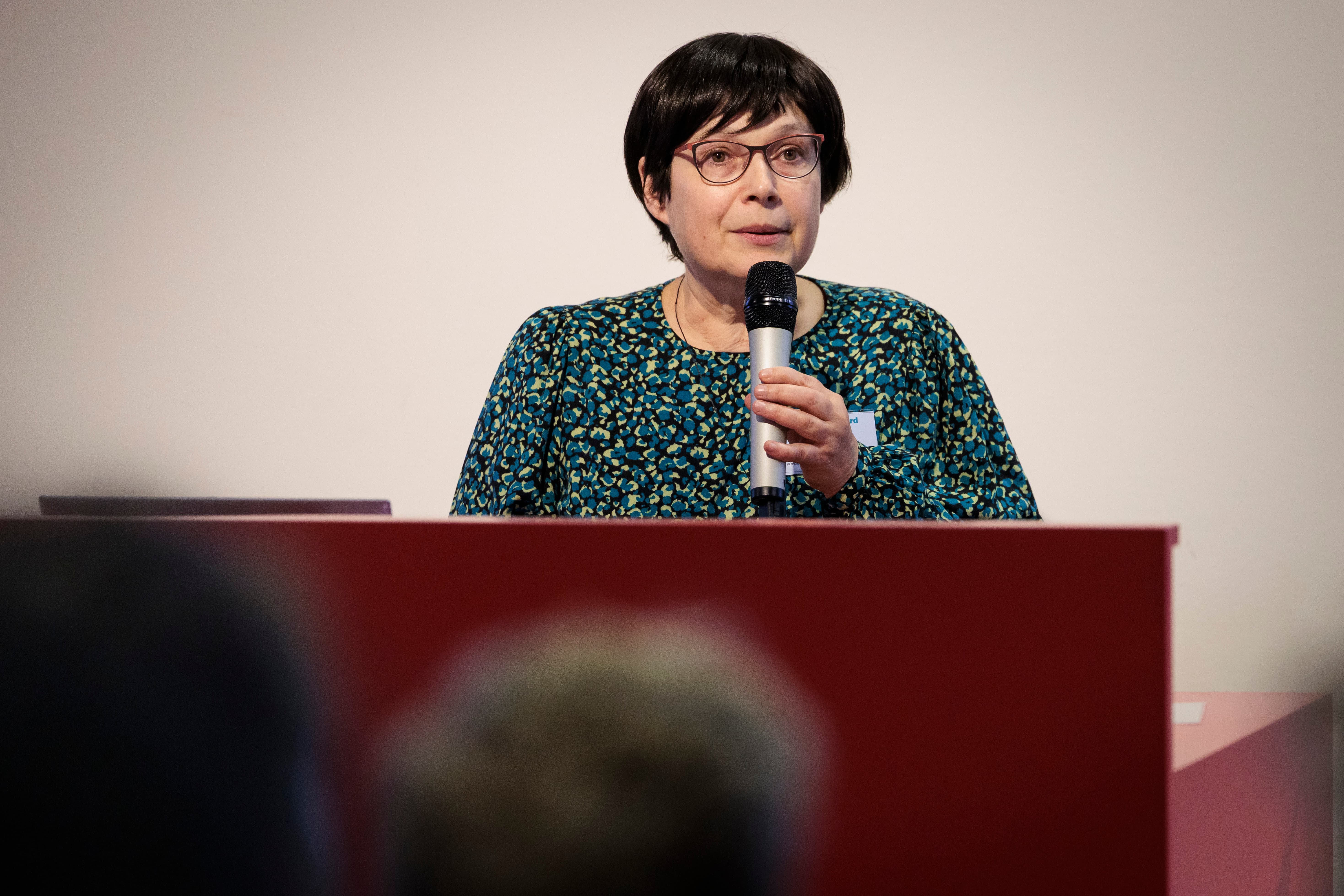
KU Leuven professor Annemie Geeraerd Ameryckx provided a concrete example of this principle. Together with her research team, she mapped the environmental impact of Leuven’s entire food system.
That means looking not only at agriculture within Leuven itself, but at the entire chain: animal feed, water, fertilisers, processing, packaging, consumption and food waste.
“People often underestimate the impacts that occur elsewhere in the chain.”
One of her main warnings is that local does not automatically mean sustainable.
“A litre of locally produced milk does not necessarily have a smaller climate footprint than milk from France or the Netherlands,” the bioscience engineer explains. “For beef, transport accounts for only a small share of the total impact. The largest impacts occur during agricultural production itself.”
Leuven’s food resilience should therefore not be reduced to the amount of farmland within the city’s boundaries.
“People still often live in a bubble. They underestimate the impacts that occur elsewhere in the chain.”
So how do you get people out of that bubble?
“By informing them,” says Geeraerd Ameryckx, “but above all by offering attractive alternatives. We shouldn’t constantly tell people what they should do. We should show them that sustainable, healthy and affordable alternatives exist.”
And Leuven has examples to offer. One is the community farm behind Park Abbey, the first of its kind in Flanders, which has received recognition from Politico and the European Parliament.
Some Urban Lab participants now want to turn their vision of a ring of pick-your-own farms and food forests around Leuven into concrete plans.
From snack to apple
Olivier De Schutter sees schools as an important lever for changing social norms.
“School meals can not only help children eat more healthily, but also teach them where food comes from and which habits are sustainable. Children then take those lessons home with them.”
City councillor Patty Liao illustrated how this can go beyond theory. She shared the example of a Leuven school where, after learning about local food, one child stopped asking for biscuits or chocolate at home and asked for an apple instead.
A small anecdote, perhaps, but exactly the kind of change the Leuven Urban Lab aims to encourage.
Another example is Foodatelier César, which provides healthy soup to schoolchildren. Owner Tom Berghmans, who also attended the event, prepares it using local ingredients supplied through the Kortom Leuven distribution platform.
“The city doesn’t have all the answers,” Thomas Van Oppens concludes, “but it can be a place where researchers, policymakers, citizens, entrepreneurs and students work out together what works – and then actually test it.”
At the same time, we should not lose sight of the wider food region.
“Local autonomy doesn’t mean trying to do everything ourselves. A resilient city also needs to cooperate beyond its own boundaries.”
That is exactly what the group continuing the work through the Living Lab Leuven Resilient intends to do. Many participants already think in terms of the wider Dijle bioregion and want their actions to benefit both Leuven residents and everyone living across that wider region.
Written by: Trees Vandamme
The Urban Lab is part of FLIGHT (Funding Leuven's Implementation of the Green, High-Impact Transition), Leuven’s project within the Leveraging Innovation and Financing for Transformation programme (LIFT), managed by NetZeroCities as part of the EU Mission for Climate-Neutral and Smart Cities. This project receives financial support through NetZeroCities from Horizon Europe, the European Union’s research and innovation programme (grant agreement No 101121530).
.png)
.png)


In partnership with

Related breakthrough projects