.jpg)

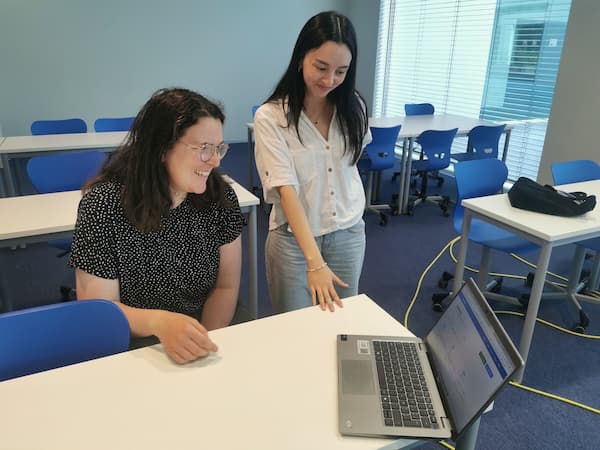
Can a digital platform help make healthy and sustainable food more accessible to people in vulnerable situations? Within the European FEAST project, four Living Labs – Prilep, Ghent, Oxfordshire and Leuven – tested innovative solutions to real-world social challenges. Two concepts were explored in depth: a Community Action Platform to encourage social interaction and an EcoFoodMap that maps local healthy food initiatives.
Each city was free to shape these solutions around its local context. In this article, we hear from all four cities about the solutions they developed.
Four cities, four different approaches
Since 2022, the Living Labs in Prilep, Ghent, Oxfordshire and Leuven have worked together to develop and test digital solutions. They explored how digital community platforms could encourage interaction, collaboration and knowledge-sharing. They also looked at ways of making local food initiatives – from farmers’ markets and food cooperatives to local producers – more visible.
Different target groups and local partners were involved in each location, calling for a tailored approach.
During the first year, the focus was on understanding these groups and their needs. Leuven brought together around 20 local organisations to discuss the need for better knowledge-sharing, greater visibility of funding opportunities and stronger connections between healthy food initiatives.
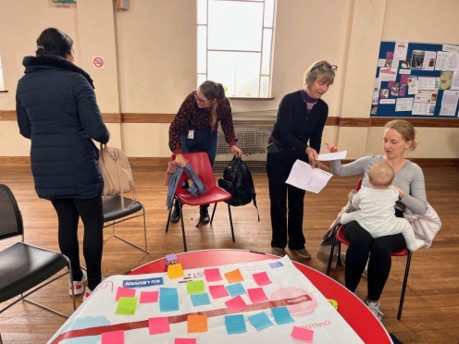
In Oxfordshire, the Living Lab used co-creation sessions with vulnerable families to explore which forms of communication worked best for parents. In Prilep, conversations were organised with educational specialists, teachers and childcare professionals.
In Ghent, meanwhile, the FEAST team spoke with local organisations and mapped existing initiatives and communication channels. These insights became the basis for eight unique co-created solutions that have been developed and tested over the past few years.
Ghent: from an open platform to smarter management and ownership
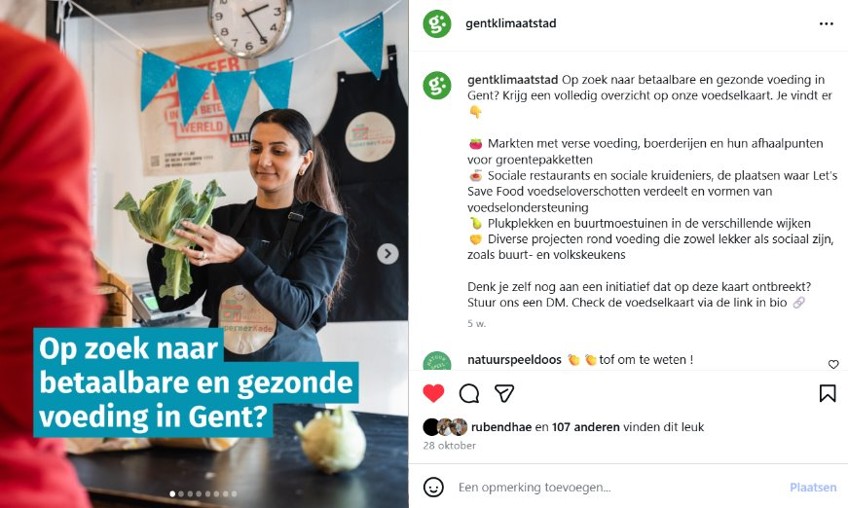
For its EcoFoodMap, Ghent did not build a new participation platform. Instead, existing data sources were brought together on a single, accessible map.
“We combined information on sustainable food initiatives, such as farmers’ markets and CSA farms, with data on food support, including social restaurants and food distribution,” explains coordinator Ruben Arnaerts.
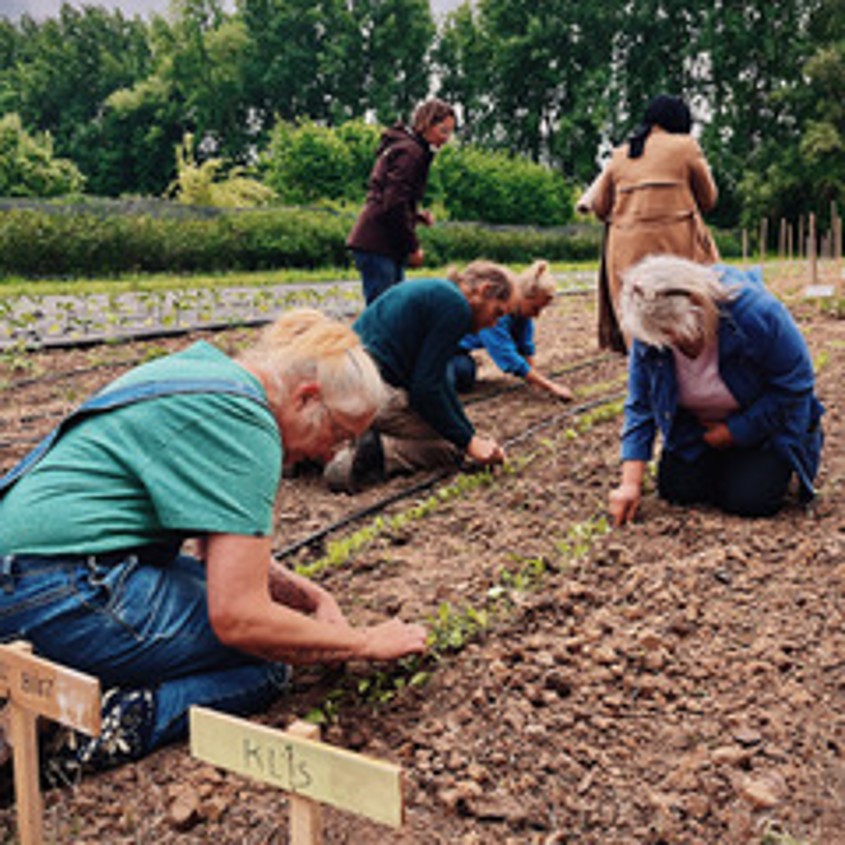
The map is less interactive than earlier initiatives such as the Gent en Garde participation platform. Users can no longer add initiatives directly themselves – something that rarely happened in practice anyway. Instead, new information goes through the city, which validates and adds it.
At the same time, this makes it much more likely that the map will continue to be used by city services after the project ends.
“By integrating a food map into the city’s IT systems, it becomes a public service rather than a temporary project.” – Ruben Arnaerts
For its Community Action Platform, Ghent deliberately chose the lowest possible barrier to entry in its two focus neighbourhoods, Watersportbaan and Dampoort. Instead of developing another new system, the team joined existing Facebook groups managed by the non-profit organisation behind the local farmers’ markets.
The decision followed conversations in Dampoort, where local organisations said they did not need another digital platform. Many were already connecting through neighbourhood meetings, flyers and word of mouth.
In Watersportbaan, however, access to healthy food was more limited and there was less community activity around food. A Facebook group linked to the new farmers’ market therefore proved a much better fit.
Leuven: co-creation through a professional knowledge platform
In Leuven, lead organisation Leuven 2030 used the EcoFoodMap to further develop the existing food map’s functionality and keep its information up to date.
“Our co-creation work therefore focused mainly on the Community Action Platform,” explains Leuven coordinator Marie Mauer.
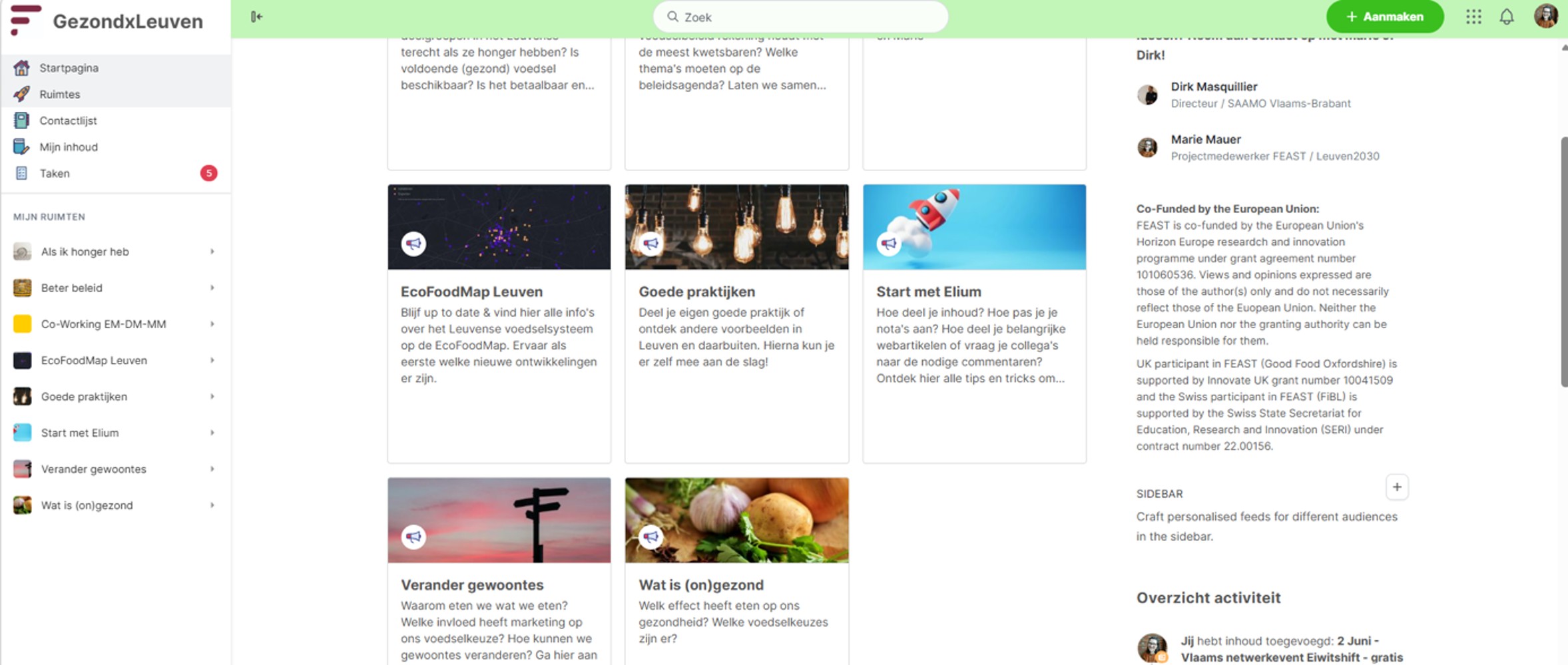
Following an open call to everyone working on food and vulnerable groups in Leuven, the team spoke with around 20 partner organisations. Three clear needs emerged: more knowledge-sharing, a better overview of funding opportunities and stronger networks around healthy food.
This highlighted the potential value of a connecting platform as a practical support tool.
Partners tested different platform options and provided feedback before Elium was selected.
“Our priority was being able to share information easily and in a structured way, and this external SaaS solution met most of our requirements,” Marie explains.
By bringing professionals such as social workers and neighbourhood coordinators together on the platform, the local FEAST team now hopes to increase its impact among vulnerable groups.
Oxfordshire: offline first, followed by integration into existing tools
The Oxfordshire FEAST team deliberately chose not to build new tools. Instead, it integrated the EcoFoodMap and a recipe portal into the existing Good Food Oxfordshire website.
“This kept both costs and technical complexity down,” says programme coordinator Caroline Welch.
It also reduced the need to promote an entirely new platform and limited the administrative burden associated with moderation and removing unsafe content.
For interaction and reach, the team mainly used Facebook and Instagram. This decision emerged from co-creation sessions with vulnerable local families.
Participants were not asking for more apps. Instead, they wanted simple, familiar information through channels they were already using. Many parents were already active in social media groups run by schools or local organisations.
Short, visually engaging posts proved more effective than lengthy written recipes.
“We now share short recipe videos and practical tips through these channels and then also distribute them through our website and YouTube.”
Prilep: building on existing channels and habits
In Prilep, North Macedonia, the team also opted firmly for existing digital channels such as Viber and Facebook, which are already widely used in the region.
“That choice reflects our target group: parents of young children have little time and respond mainly to short, direct communication,” explains coordinator Adela Gjorgjioska.
“The best technology is the technology your target group already uses.” – Adela Gjorgjioska
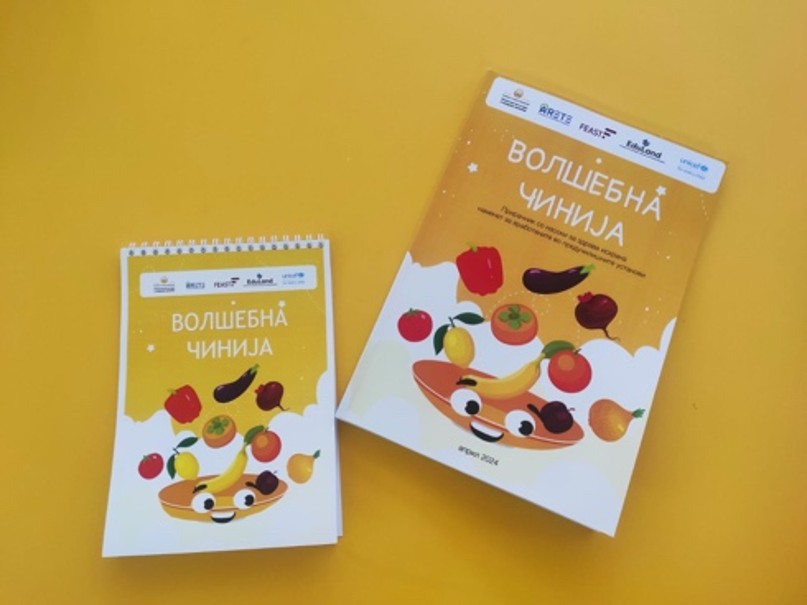
Together with educational specialists, teachers and childcare professionals, her team also developed the Magic Plate, an educational toolkit containing interactive materials on healthy food for preschools.
“It helps children discover healthy eating habits through play.”
The team hopes to integrate the material into the national EDUINO platform in the near future, giving parents and educators more structured access to it.
Adela Gjorgjioska and her colleagues are also testing more visually appealing preschool menus shared digitally through Viber and Facebook.
“At the moment, menus are often simple black-and-white sheets hanging on a wall. By making them more attractive and sharing them digitally, we hope to involve parents more closely in school meals and inspire them to cook healthy food at home too.”
According to the FEAST coordinator in Prilep, vulnerable groups are constantly exposed online to marketing promoting cheap, quick and unhealthy food.
“That means we should use digital tools not only to reach people, but also to expose these influences, make them more transparent and provide a counterweight.”
The team has also recently launched its EcoFoodMap using Google Maps.
“We want to visualise the distance between preschools and local food producers, primarily as an advocacy and awareness-raising tool.”
Growth hacking: lessons from the Living Labs
Just as each Living Lab developed its own EcoFoodMap and Community Action Platform, each also created its own strategy for reaching target groups and keeping them engaged over time.
In Leuven, the growth-hacking approach combines network-building, phased testing and targeted activation.
“We deliberately started small, with limited test groups, and then scaled up step by step,” Marie Mauer explains. “The newsletter played a central role as a trigger, directing local professionals such as social workers towards our platform.”
When it became clear that users rarely took the initiative to share content themselves, the Leuven team changed its approach.
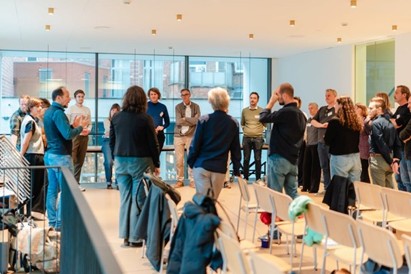
“We moved from a fully participatory platform towards a model with more editorial guidance. For example, we regularly looked for interesting stories and best practices among our users and supported them in writing and publishing these.”
Newsletters, updates and contributions from ambassadors helped bring local professionals back to the platform. Additional moderation is still needed, however, to create enough interaction and eventually scale up.
It soon became clear that the real added value did not lie solely in the platform itself, but in the process around it.
“The different partners really got to know one another through physical meetings, co-creation sessions and joint activities.”
“We’ve been conditioned to think that a post with only two likes has no value. But if it leads to action, then we’ve achieved our goal.” – Marie Mauer
In Ghent, the team ‘hacked’ social dynamics by plugging into something that was already working: existing Facebook groups around farmers’ markets.
“The local character – communication and activities tailored to each neighbourhood – generated high engagement,” Ruben Arnaerts explains. “At first, the city still supported these groups, but after a while we deliberately handed control over to the neighbourhood itself.”
The social media groups also served as testing environments, allowing the city to gather rapid feedback through polls and online interactions.
They also became places for practical exchange: residents shared ideas for preparing seasonal vegetables and tips on travelling to the market. This created more contact not only between residents, but also between market traders and local organisations.
Prilep applied growth hacking by creating a snowball effect.
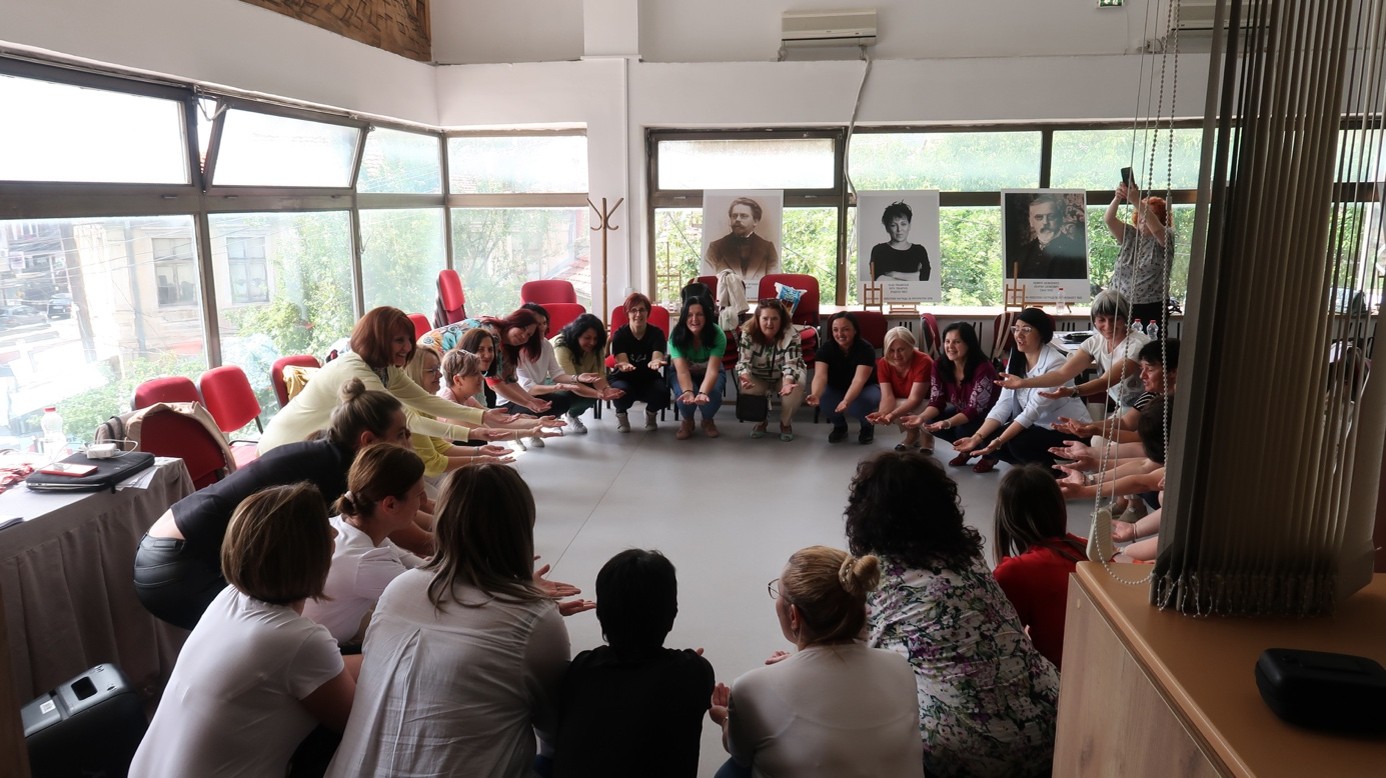
“We worked with the relevant ministry, the municipality and other strategic partners,” says Adela Gjorgjioska. “Our Magic Plate game began as a single intervention in one preschool, but eventually the educational materials were used to train childcare professionals across the country.”
The team achieved this by working with the Ministry of Labour and Social Policy, UNICEF and other national partners.
In Oxfordshire, the growth hack was about physical presence and co-creation in the community.
“We didn’t ask parents, who often already have very busy lives, to come to us,” Jessica Kopp explains. “Instead, we joined existing activities such as stay-and-play sessions together with trusted people from the community.”
“Vulnerable families don’t need more apps. They need simple, familiar content.” – Caroline Welch
This approach took more time than expected but generated insights that were much closer to parents’ everyday experiences.
“We realised that parents are often already overwhelmed. They don’t need all kinds of complex interventions or new tools. That became the basis for our next steps, such as sharing recipes that were better suited to families through apps they already used or other channels that required no additional time from them.”

The team continued to observe, ask questions and adapt. Local ‘community cooks’, for example, were recruited to make short and accessible recipe videos. With social media training, those videos could be shared across several channels, from Instagram to the website and YouTube, reaching a much wider audience than conventional cooking workshops.
Shared barriers and lessons
Technology is no magic wand.
“We also discovered that our partners face financial challenges, and a digital platform cannot solve those,” says Marie Mauer. “We had to listen while being honest about what we could and could not offer.”
Her co-coordinator Käbi Vanwinkelen of KU Leuven and Dirk Masquillier, director of partner organisation SAAMO vzw, also reflected on the first co-creation sessions with around 20 partners.
“We quickly realised that we didn’t know enough about what was really going on. We first needed to slow down and invest in getting to know one another before we could take digital steps.”
In Oxfordshire, the FEAST team encountered an ‘academic wall’. Caroline Welch found that questionnaires were too long and complex for vulnerable parents, causing participants to disengage quickly.
Because the research methodology had already been defined, the team had to work pragmatically, for example by asking trusted intermediaries to go through questionnaires one-to-one with participants – a time-consuming solution with limited results.
The lesson? Speak your audience’s language and connect with moments and places where they are already present.
“Long-term engagement also requires trust and fair recognition of participants’ time and effort.”
In Ghent, the challenge was turning insights into action.
“A map shows where services are missing, but it doesn’t fill those gaps itself,” Ruben Arnaerts points out.
The value comes when insights lead to concrete initiatives, such as the new farmers’ market in Watersportbaan. In another example, the manager of a community kitchen discovered that the need in her neighbourhood was smaller than expected and moved the initiative to an area where it could have greater impact.
For Prilep, the key lesson was the practical feasibility of digital interventions.
“You need to keep the workload for partners as low as possible and take responsibility yourself where necessary,” says Adela Gjorgjioska.
By working flexibly around internal schedules and taking a pragmatic approach, the team was able to deal with different expectations and deadlines.
She also highlights a blind spot: digital safety.
“Photos of children are still shared too easily on social media. We need to raise greater awareness of privacy and the safe use of digital tools.”
A guide for cities
Digital tools and co-creation to promote healthy food
1. Don’t make assumptions
Marie Mauer: “Social media have taught us to measure success in likes and comments. A post with little interaction can quickly seem insignificant, but that doesn’t mean nobody is reading it. If a post leads to action behind the scenes, then we have achieved our goal.”
2. Integrate your data into existing structures
“Connect your food map to your city’s IT environment,” Ruben Arnaerts recommends. “That turns it into a lasting public service instead of a temporary project – and only then does an initiative like this really make sense.”
3. Use what already exists
Prilep’s choice of Viber and Ghent’s use of Facebook show that you do not need to spend a fortune on new software.
“The best technology is the technology your target group already uses,” says Adela Gjorgjioska.
At the same time, there is no one-size-fits-all solution.
“You have to keep testing, adapting and accepting that you won’t reach everyone,” Caroline Welch adds.
4. Be present offline too
Whether it is an outreach worker such as Jessica Kopp in Oxfordshire, local organisers in Ghent, social workers in Leuven or childcare professionals in Prilep, people on the ground make the difference.
As Marie Mauer puts it: “Technology is an accelerator, not a replacement. A digital platform only comes alive when the offline foundations are strong too.”
“We didn’t ask parents to come to us. We joined them at moments when they were already coming together.” – Jessica Kopp
Co-funded by the European Union
FEAST is co-funded by the European Union’s Horizon Europe research and innovation programme under grant agreement number 101060536. Views and opinions expressed are those of the author(s) only and do not necessarily reflect those of the European Union. Neither the European Union nor the granting authority can be held responsible for them.
The UK participant in FEAST (Good Food Oxfordshire) is supported by Innovate UK grant number 10041509 and the Swiss participant in FEAST (FiBL) is supported by the Swiss State Secretariat for Education, Research and Innovation (SERI) under contract number 22.00156.





In partnership with

Related breakthrough projects


.jpg)
.jpg)

.jpg)