
During the first two years of FEAST (2022-2024), FEAST in Leuven evolved into a broad collaboration focused on healthy and sustainable food for people in vulnerable situations. Together with a wide range of organisations, research institutions, and local partners, we explored how digital tools and collaboration can contribute to a more accessible food system. From international knowledge exchange and academic research to conversations with community organisations in Leuven, this is the story of the first steps, insights, and partnerships within FEAST.
An International Project with Local Ambitions
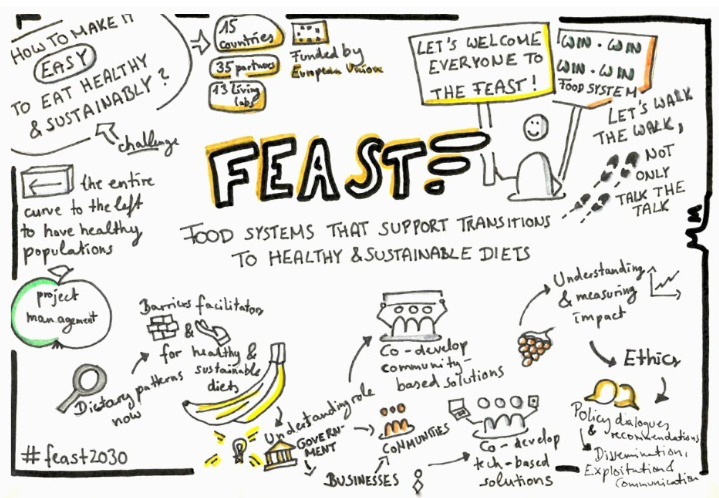
In January 2022, FEAST officially kicked off during a launch event in Heidelberg. No fewer than 35 partners from 15 countries came together to join forces around healthy and sustainable food.
In Leuven, Leuven 2030, KU Leuven, and SAAMO took the lead. During the autumn of 2022, the project also began to take shape locally. Together with the Food Connects (Voeding Verbindt) network, we discussed how Leuven could accelerate the transition towards healthy and sustainable food. Feedback was gathered on the digital tools that would be developed within FEAST, while the Leuven Food Council (VLAR) was introduced to the project.
In December, the English-language FEAST website went live, and the Leuven project partners further refined the project's concept and approach during a series of workshops.
From an International Project to a Leuven Educational Partnership
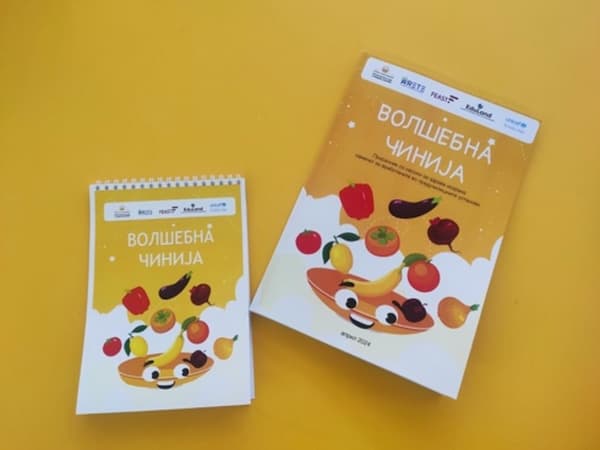
At the beginning of 2023, international collaboration gained momentum. Leuven, Ghent, Prilep (North Macedonia), and Oxfordshire (United Kingdom) launched a joint trajectory focused on digital tools and communication with vulnerable target groups. Over the following years, each region would develop and test its own Eco Food Map and Community Action Platform, placing co-creation and user-friendliness at the heart of the process.
The four regions also collaborated on an academic study examining communication with vulnerable groups. Leuven 2030 played a leading role in this research, working closely with KU Leuven and Heidelberg University Hospital.
At the same time, collaboration with UCLL (University Colleges Leuven-Limburg) was established. The partnership emerged during the Leuven 2030 Urban Lab, where academic research and the climate transition came together. UCLL computer science students began developing a renewed and more interactive version of the Eco Food Map. This platform maps the food system in and around Leuven and makes initiatives, organisations, experts, and key indicators visible.
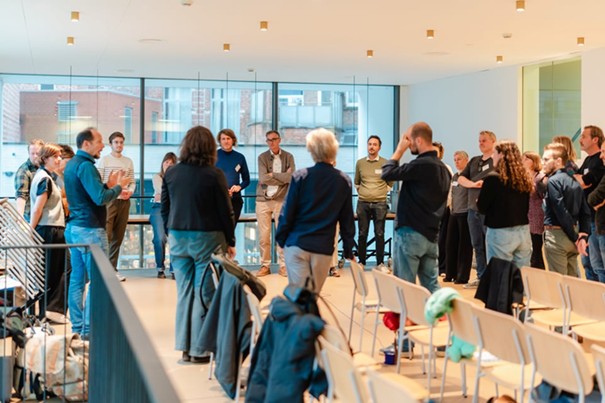
In March, FEAST returned to the Urban Lab. During two roundtable discussions focused on food at school and healthy eating habits for vulnerable groups, more than 40 participants exchanged ideas. The project thus gained valuable new input from both academic research and local expertise.
In April 2023, KU Leuven launched its research project on food and digital media. Around 300 adolescents participated, including students from the Heilig Hart Institute in Leuven.
Mapping Needs Together with Local Partners
In May 2023, FEAST gained international visibility during the first FEAST hackathon, “Hack for Food, Hack for Good”, in Milan. The event focused on technological solutions to reduce food insecurity and food waste. During an online inspiration session, we shared the first insights emerging from the Tech Living Labs.
Meanwhile, the Leuven network continued to grow. In June, Living Lab Leuven expanded its connections with organisations working on food and supporting people in vulnerable situations.
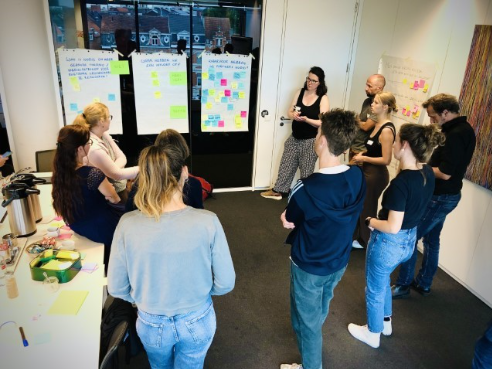
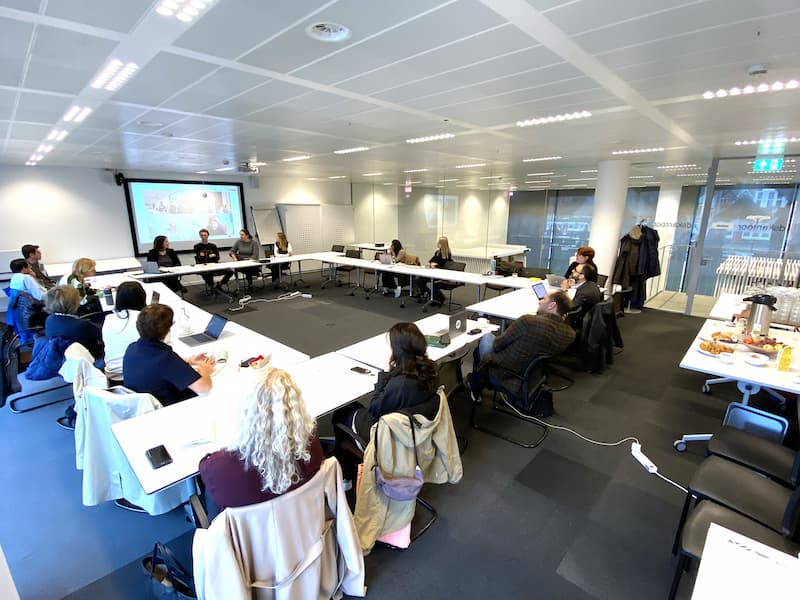
On 13 September 2023, the first stakeholder meeting took place. Representatives from SAAMO, KU Leuven, Huis van het Kind, RuimteVaart, School 2030, Rikolto, CAW Oost-Brabant, De Wissel vzw, Enchanté vzw, and Zorg Leuven joined the discussion. Together, they combined their expertise and experiences. Good practices inspired participants to identify the needs within Leuven’s food system and explore possible digital solutions.
The network continued to expand through additional conversations and one-to-one interviews, providing valuable insights from potential stakeholders.
From Needs Assessment to a Digital Collaboration Platform
In November 2023, we took stock of the first round of stakeholder conversations. The key needs and challenges had been mapped out, making it possible to investigate which type of Community Action Platform could address them most effectively.
Five possible scenarios were explored, marking the transition from an exploratory phase to a participatory design process.
During the second stakeholder meeting on 20 December, the most promising scenarios were refined further. Participants also discussed the desired functionalities of the future platform. These insights laid the foundation for the next step: a market analysis of existing SaaS solutions.
Putting People, Not Technology, at the Centre
At the start of 2024, the market analysis ran in parallel with efforts to better understand potential users. In February, we met again with coordinators and community workers. Who are our users? How do they work? What are their priorities? How do they communicate with people in vulnerable situations?
Marketing students from UCLL contributed to this process during their International Sustainability Weeks. Through advisory sessions, users became familiar with the Eco Food Map and provided valuable feedback on possible improvements.
In March, the focus increasingly shifted from technical development to content and user perspectives. Most importantly, we wanted to hear directly from people experiencing vulnerability themselves.
Together with SAAMO, we organised focus groups within local community initiatives that operate social restaurants. We examined the extent of food insecurity among our target groups in Leuven and explored perceptions of healthy and sustainable food. What barriers do people experience? What role do knowledge, skills, and living conditions play? And how do they perceive the services offered by social food initiatives?
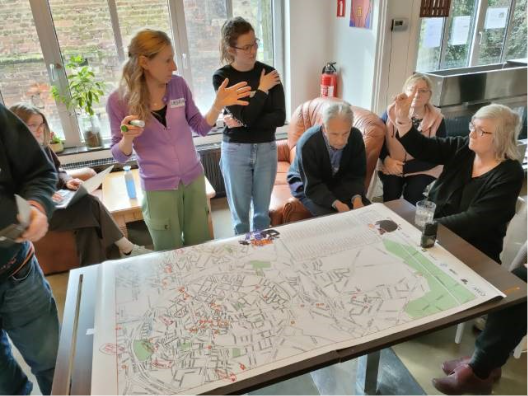
On 15 April, the third stakeholder meeting took place. We presented the results of the market analysis of existing SaaS platforms and shared our preferred option. At the same time, we jointly explored a critical question: where should Leuven focus its efforts if it truly wants to strengthen community action? The project was gaining a clearer direction.
In May 2024, several stakeholders deepened their engagement, paving the way for the next phase: co-creation. Together, we would continue shaping the Community Action Platform while exploring future actions and collaborations.
The ultimate goal remained unchanged: creating a positive impact on access to healthy and sustainable food for people in vulnerable situations. We continued to investigate how a digital solution could support and strengthen this ambition.
Learning Across Borders
International collaboration also continued to flourish. At the beginning of October 2024, all FEAST partners gathered in Viana do Castelo, in Portugal’s Alto Minho region.
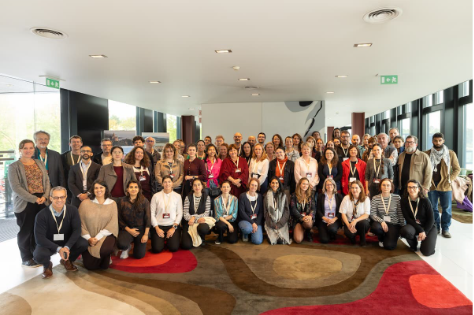
During the first day, participants visited several local initiatives promoting healthy and sustainable food. These included a school, local farms, and a recently established fish and vegetable market where farmers can offer their products free of charge.
The second day focused on the achievements and experiences of the Tech Living Labs in Ghent, Leuven, Prilep, and Oxfordshire. These living labs are coordinated by Leuven 2030 and KU Leuven. Partners exchanged insights, explored opportunities within their respective food regions, and worked together to address challenges emerging from the living labs.
Because that is what FEAST is ultimately about: learning from one another, sharing experiences, and jointly developing ways to make healthy and sustainable food more accessible.
Continuing to Build Change Together
The first years of FEAST set many things in motion. What started as an international research and collaboration project grew in Leuven into a broad network of organisations, researchers, students, and local partners.
By combining digital opportunities with local expertise and the lived experiences of people in vulnerable situations, we are gradually developing solutions that reflect the realities of Leuven’s food system.
The central message remains clear: healthy and sustainable food should be accessible to everyone. Achieving this requires not only new technologies, but above all collaboration, engagement, and a shared commitment to making change happen.
In partnership with

Related breakthrough projects