


.jpg)

Every day, something remarkable happens beneath the halls and studios of STUK Leuven. In the kitchen, people are not only preparing food, they are also building trust, connection and positive change.
Volunteers from a wide range of backgrounds work alongside the permanent kitchen staff to prepare a fully vegetarian, mostly plant-based buffet. What may seem like a practical collaboration at first glance is, in reality, a warm and supportive ecosystem where everyone benefits.
Volunteers at the heart of the kitchen
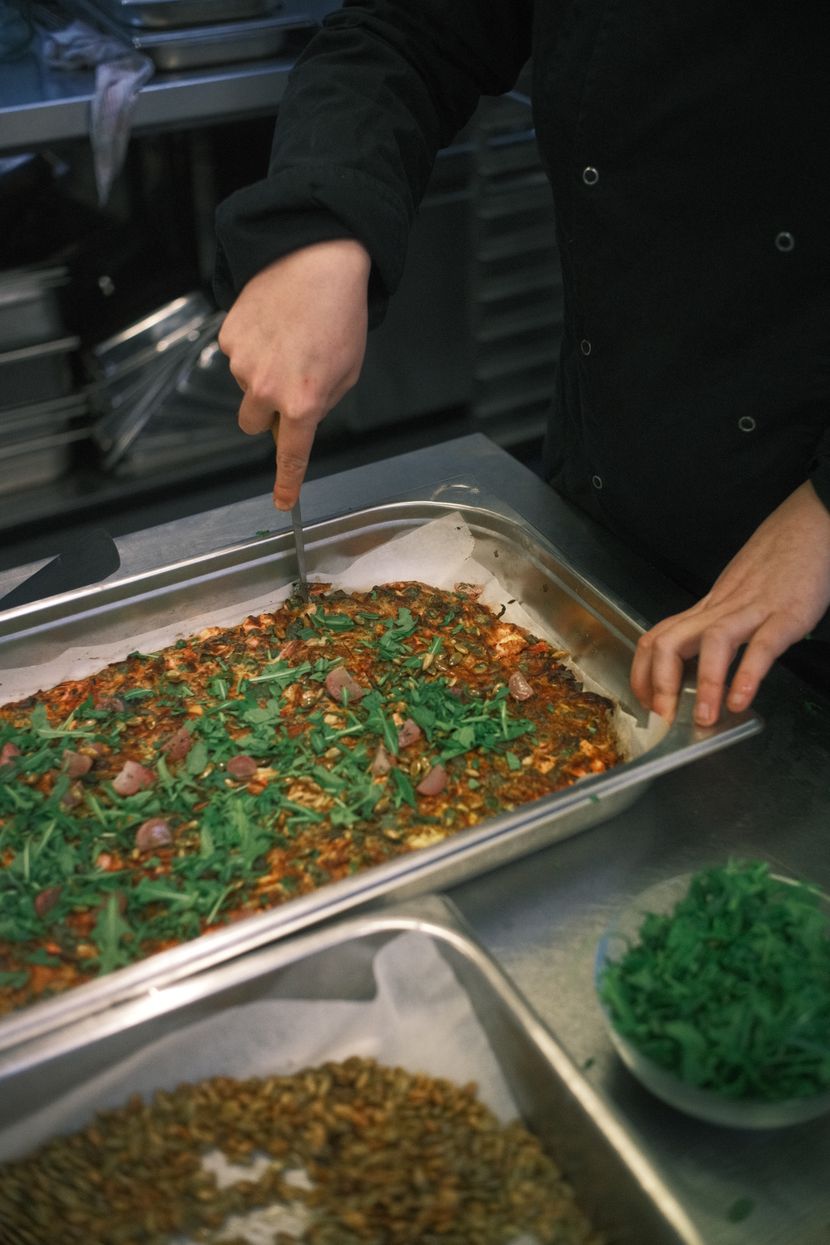
STUK's kitchen depends on volunteers who work across several daily shifts. Retirees, students, newcomers, young people seeking an alternative to traditional education and people experiencing mental health challenges all work side by side.
For STUK, volunteering is not an add-on—it is an essential part of the organisation's daily operations.
The benefits are clear. Thanks to its volunteers, STUK can offer an extensive lunch buffet with a wide variety of dishes while remaining flexible during busy periods such as festivals and events. Having many helping hands makes it possible to prepare fresh, creative, high-quality meals within a realistic budget.
Just as importantly, volunteers contribute something that is often in short supply in professional kitchens: time, care and personal attention.
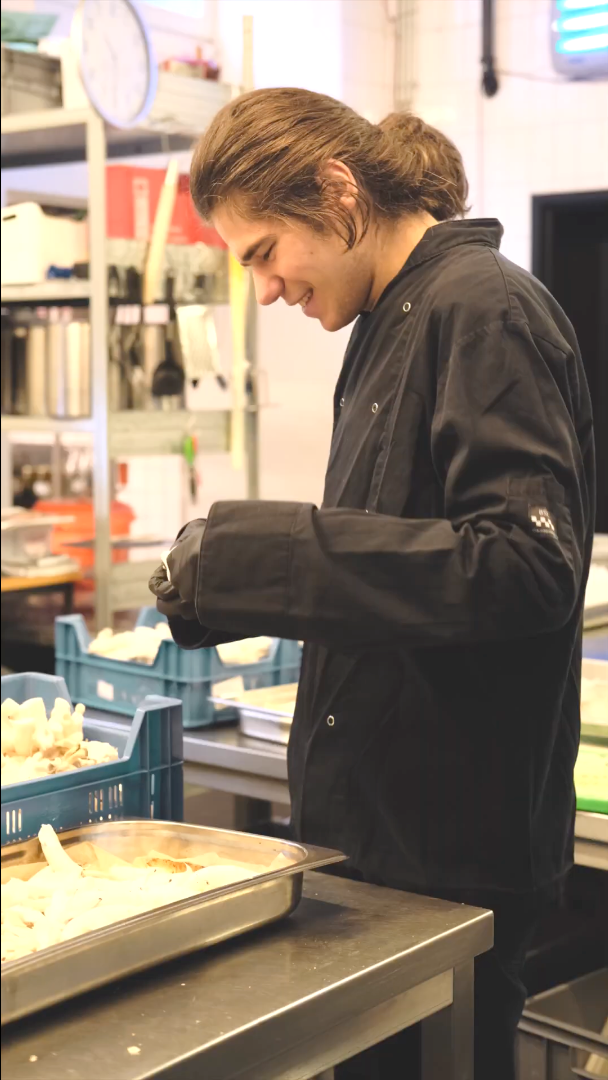
However, the programme is about much more than efficiency. By working with fixed shifts, STUK creates continuity. Volunteers become familiar faces rather than anonymous helpers. They are given tasks that match their interests and abilities. Some enjoy preparing salads or desserts, while others prefer chopping vegetables or helping with food preparation.
This personalised approach requires guidance, but it also builds a committed and loyal team.
A place to learn, grow and flourish
For the volunteers themselves, the experience is equally valuable.
Many describe STUK as a safe place where they are free to learn, experiment and make mistakes without pressure. For some, it is their first step towards greater independence or self-confidence. For others, it offers social connection and a welcome sense of routine.
The kitchen team teaches new skills patiently and gradually. Responsibilities grow over time, and even small achievements—such as preparing a dish independently or contributing to the daily lunch service—can have a profound impact.
As one of the chefs explains:
"Even if they don't contribute a huge volume of work, simply being able to contribute gives them a real sense of fulfilment."
This approach creates genuine opportunities for personal development. Volunteers who initially seem quiet or uncertain gradually become more confident. They begin to chat, take initiative and share jokes with colleagues.
Humour plays an important role. Differences are acknowledged without judgement and with warmth, allowing diversity to become a natural part of the team rather than something to hide.
A welcoming atmosphere without labels
STUK deliberately avoids treating volunteers as separate or "different."
They share meals with colleagues, spend time in the café and interact with staff members, artists and visitors on an equal footing. For some volunteers, simply being treated as a full member of the team is a transformative experience.
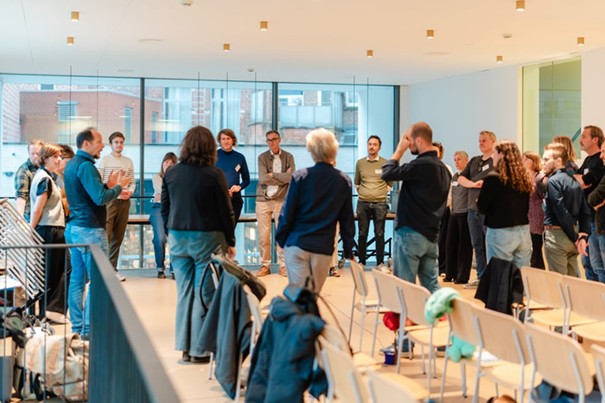
This inclusive attitude extends beyond the kitchen. Volunteers become part of the wider cultural life of STUK, meeting colleagues, audiences and artists. Some even stay after their shift to attend performances, exhibitions or informal conversations.
The atmosphere is often described as family-like—and for good reason. People feel genuinely seen and heard.
That sense of trust creates space for meaningful conversations about life, doubts and ambitions. Although these relationships require time and emotional investment from the permanent staff, they are also one of the most rewarding aspects of the programme. As one staff member puts it: "It feels more like family than work."
Plant-based food as a shared choice
Alongside its volunteer programme, STUK's predominantly plant-based menu is another cornerstone of this best practice.
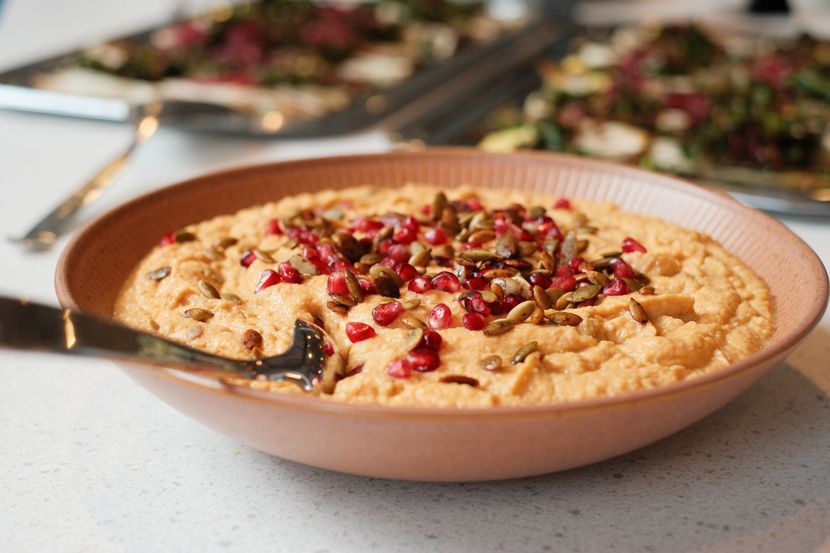
The lunch buffet is entirely vegetarian and largely vegan.
This choice is rooted in sustainability, but it is also practical and inclusive. Cooking with plant-based ingredients makes it easier to accommodate different cultural backgrounds, beliefs and dietary needs. Without the need for halal or other dietary labels, everyone can enjoy the same buffet together.
The kitchen always starts from a vegan base, with optional variations added where appropriate. As a result, everyone has access to a complete and satisfying meal without exceptions.
The approach is refreshingly straightforward.
Rather than relying on labels or slogans, STUK simply serves delicious plant-based food. Many visitors only realise afterwards that they have eaten an entirely vegetarian meal.
By making sustainable food the default, STUK helps normalise plant-based eating while reducing resistance. The buffet—with its hot dishes, salads and spreads—also demonstrates just how varied, flavourful and nourishing plant-based meals can be.
Making a difference together
The strength of STUK Leuven lies in the combination of two complementary approaches.
Volunteers are given the trust, support and opportunities they need to grow, while at the same time contributing to a sustainable and socially connected food initiative.
The result is much more than a well-functioning kitchen. It is a place where people develop new skills, where diversity is embraced, and where sharing a meal creates genuine human connection.
STUK's approach shows how cultural organisations can play a meaningful social role without losing their unique identity. By investing in both people and plant-based choices, STUK demonstrates that meaningful change does not always have to be large or loud.
Sometimes, it begins with a shared meal, a welcoming workplace and the simple feeling of belonging.


.jpg)
%20(1).jpg)
.jpg)
.jpg)